Archive for the ‘Uncategorized’ Category

NanoBusiness Endorses Introduction to Safe Handling of Nanomaterials – Mar. 28th Anaheim, CA

Posted on March 8th, 2011 in Uncategorized | No Comments »

Many of you in the nanotechnology community are familiar with our good friend Kristen Kulinowski, Ph.D. Kristen has been one of our leaders in providing information in regard to the safe handling of nanomaterials. Kristen and her team’s website http://goodnanoguide.org/tiki-index.php?page=HomePage is one of my favorites. Today I would like to share with you an opportunity for you to participate in a unique program called, “Introduction to Safe Handling of Nanomaterials in the Workplace” presented by the American Chemical Society (ACS) http://www.proed.acs.org/.

This course will cover aspects of occupational health and safety as they relate to handling nanomaterials. The emphasis is on controlling human exposure. The course begins with an introduction to nanomaterials and the physicochemical properties of the major classes. Major developments in the toxicology and environmental impacts literature will be summarized along with their implications for occupational practice. The next topic is strengths and weaknesses of existing tools for assessing and controlling exposure. Principles of risk management for nanomaterials will be introduced, including emerging topics such as control banding. Major activity in the regulatory and standards arenas will be summarized. The course will conclude with an introduction to essential resources that attendees can consult after the course is over.

MONDAY, MARCH 28, 2011
Check-in opens at 7:30am on the day of the course. Course runs from 8:30am to 5:00pm

REGISTER TODAY $695
The course fee includes a course binder and a continental breakfast each day.

Five for Four! Register five people for one course, one person for five courses, or any combination in between and your fifth registration is free. Note: This discount is only available if you register by fax or mail and mention this discount. May not be combined with any other offer.

Register online for this class in Anaheim, CA
Course Code: NANO
http://www.regonline.com/Register/Checkin.aspx?EventID=916169

Register with form via mail or fax
Course Code: NANO
http://www.proed.acs.org/courses/registration.pdf

KEY TOPICS
– Introduction to nanomaterials
– Toxicology of nanomaterials: research review
– Environmental impact of nanomaterials: research review
– Assessing and controlling exposure to nanomaterials: strengths/weaknesses of existing technologies
– Risk managements approaches: key elements, control banding
– Regulations and Standards: key regulatory agencies’ activities and standards on nanomaterials
– Information management in the nanotech workplace: essential resources for further education

COURSE INSTRUCTOR(S)
Kristen Kulinowski http://chemistry.rice.edu/FacultyDetail.aspx?RiceID=1200 is a Ph.D. Chemist and director of International Council on Nanotechnology as well as executive director of NSF Center for Biological and Environmental Nanotechnology.

Bruce Lippy http://mysite.verizon.net/bruce.lippy/html/team.html is a certified industrial hygienist, a certified safety professional and holds a Ph.D. in policy from the University of Maryland.

EVENT LOCATION
Hilton Anaheim http://www.hiltonanaheimhotel.com/
777 Convention Way

Anaheim, CA 92802

HOTEL RESERVATIONS
Discount room reservations can be made through the ACS Housing Connection.
https://resweb.passkey.com/Resweb.do?mode=welcome_ei_new&eventID=3092081

Direct questions about the course to:
Phone: 202-872-4508, Email: shortcourses@acs.org

This is a subject that is vital to our nanotechnology community. Please continue to educate yourself on this topic.

Regards,

Vincent Caprio
Executive Director
NanoBusiness Alliance
203-733-1949
vincentcaprio@nynanobusiness.org
www.nynanobusiness.org
www.vincentcaprio.org

NanoBusiness Interview – Mihail Roco, Senior Advisor to the NSF and NNI

Posted on February 7th, 2011 in Uncategorized | No Comments »

In this month’s interview, we talk to Mihail (“Mike”) Roco. Dr. Roco http://www.nsf.gov/eng/staff/mroco.jsp proposed the National Nanotechnology Initiative (NNI) on March 11, 1999, at the White House, and is a key architect of the NNI. He is Senior Advisor for Nanotechnology to the National Science Foundation (NSF), and the founding chair of the U.S. National Science and Technology Council’s Subcommittee on Nanoscale Science, Engineering and Technology (NSTC/NSET). Prior to joining National Science Foundation, he was Professor of Mechanical Engineering at the University of Kentucky (1981-1995), and held visiting professorships at the California Institute of Technology (1988-89), Johns Hopkins University (1993-95), Tohoku University (1989), and Delft University of Technology (1997-98). His research was on multiphase systems, computer simulations, nanoparticles and nanosystems. Credited with thirteen patents, Dr. Roco contributed over two hundred archival articles and twenty books including “Particulate Two-phase Flow” (1993) and “Nanotechnology Research Directions” (1999), and more recently “Managing Nano-Bio-Info-Cognition Innovations” (2007), “Mapping Nanotechnology Knowledge and Innovation: Global and Longitudinal Patent and Literature Analysis” (2009) and “Nanotechnology Research Directions for Societal Needs in 2020” (2010).

Dr. Roco has been an international leader of nanotechnology development and of converging new technologies (NBIC: nano-bio-info-cognitive sciences). He initiated the first U.S. federal government program that focused on nanoscale science and engineering (on Synthesis and Processing of Nanoparticles) at NSF in 1991. He is editor-in-chief for the Journal of Nanoparticle Research, and has been a member of international research councils including the International Risk Governance Council in Geneva. Dr. Roco is a corresponding member of the Swiss Academy of Engineering Sciences, and a fellow of American Society of Mechanical Engineers, the American Institute of Chemical Engineers, and the Institute of Physics. He was elected as the Engineer of the Year by the U.S. National Society of Professional Engineers and NSF in 1999 and again in 2004. Dr. Roco was awarded the National Materials Advancement Award from the Federation of Materials Societies in 2007 at the National Press Club in Washington, DC, “as the individual most responsible for support and investment in nanotechnology by government, industry, and academia worldwide.”

In our interview, Mike notes that nanotechnology is recognized today along with information technology and biotechnology as a megatrend in science and engineering. He points out that nanotechnology has provided solutions for about half of the new projects on energy conversion, energy storage, and carbon encapsulation in the last decade. In the coming decade, Mike expects nanotech commercialization to become a powerful driver of innovation, job and wealth creation in the global economy. We hope you enjoy the interview with Mike Roco. – Steve Waite

SW: It’s great to be speaking with you, Mike. Thanks for spending some time with us. You and a group of 250 leading scientists, researchers and experts in nanotechnology recently published a terrific book titled “Nanotechnology Research Directions for Societal Needs in 2020: Retrospective and Outlook” (Nano 2020, for short). It’s clear from reading the book that nanotechnology has come a long way in the past decade, but still has a long way to go. What do you consider to be the major achievements of the past ten years?

MR: Nano 2020 report provides a twenty-year overview of the development of nanotechnology from a fragmented scientific field at the end of the 1990s to a general purpose technology by 2020. The first part of the report evaluates the progress and outcomes of nanotechnology in the last ten years and how the vision set up in 1999 by Nano 2010 has been realized. Nano 2010 stands for the report “Nanotechnology Research Directions: Vision for the Next Decade” (NSTC, 1999 and Springer, 2000, http://www.wtec.org/loyola/nano/IWGN.Research.Directions/) that inspired the National Nanotechnology Initiative (NNI) and more than 60 other national programs. The first foundational phase of nanotechnology development “Nano 1” (2000-2010) was dominated by a science-centric ecosystem. The second foundational phase “Nano 2” (2011-2020) will be focused on nanoscale science and engineering integration. It is projected to be driven by socio-economic considerations.

In the last decade an interdisciplinary international community and a complex research and education infrastructure have been established. Nanotechnology has penetrated almost all industrial sectors and medicine, and the production of nanotechnology-enabled products has expanded with an annual rate of 25 percent to about $90 billion in the U.S. and $250 billion worldwide.

Scientific curiosity began to transform in 2000 with the help of two key parts of the Nano 2010 report. First, an integrative definition of nanotechnology was formulated based on distinctive behaviors of matter at the nanoscale and the ability to systematically control and engineer those behaviors. Second, a long-term vision and goals were articulated for the transformative potential of nanotechnology R&D to benefit society. Now, nanotechnology is recognized along with information technology and biotechnology as a megatrend in science and engineering.

One main outcome is a library of newly discovered nanoscale phenomena, processes and nanocomponents, as well as a versatile measurement and manufacturing tool-kit. These phenomena have become the foundation for new domains in science and engineering such as plasmonics, negative index of refraction in IR/visible wavelength radiation, spin torque transfer (spintronics), nanofluidics, programmable macromolecules, sub-cellular phenomena and synthetic biology, and teleportation of information between atoms. Other nanoscale phenomena are better understood such as quantum confinement, polyvalency, and shape anisotropy. New nanocomponents include one-dimensional nanowires and quantum dots of various compositions, polyvalent noble metal nanostructures, graphene, metamaterials, nanowire superlattices, and a wide variety of other particle compositions. New tools for nanotechnology have allowed femtosecond measurements with atomic precision in domains of engineering relevance. Single-phonon spectroscopy and sub-nanometer measurements of molecular electron densities have been performed. Single-atom and single-molecule characterization methods have emerged that allow researchers to probe the complex and dynamic nature of nanostructures in previously impossible ways. Together, these discoveries and tools have established a broad interdisciplinary foundation for new technologies.

Already, myriad R&D results include technological breakthroughs in such diverse fields as advanced materials, biomedicine, catalysis, electronics, and pharmaceuticals; expansion into new fields such as energy resources and water filtration, agriculture and forestry; and integration of nanotechnology with other emerging areas such as quantum information systems, neuromorphic engineering and synthetic and system nanobiology. “Nanomanufacturing” is already underway and is a growing economic focus.

Nanotechnology has provided solutions for about half of the new projects on energy conversion, energy storage, and carbon encapsulation in the last decade. Nanotechnology also has provided more than half of solutions for entirely new families of nanostructured and porous materials with very high surface areas, including metal organic frameworks, covalent organic frameworks, and zeolite imidazolate frameworks, for improved hydrogen storage and CO2 separations. Nanocomposite membranes, nanosorbents, and redox-active nanoparticles have been developed for water purification, oil spill cleanup, and environmental remediation.

There is greater recognition of the importance of nanotechnology-related environmental, health, and safety (EHS) issues for the first generation of nanotechnology products, and of ethical, legal, and social implications (ELSI) issues.

Nanotechnology has catalyzed overall efforts in and attracted talent to science and engineering in the last decade worldwide. A comprehensive list of outcomes arranged per areas of relevance is presented in the 600-page Nano 2020 report (Springer, 2010, available on www.wtec.org/nano2/ and www.nsf.gov/nano). The forecasts made in the Nano 2010 report generally have been realized, and some have been exceeded.

SW: The U.S. has invested some $12 billion in nanotech through the NNI over the past decade. Please give us a sense of how this investment has paid off to date and how it may payoff in coming years.

MR: Nanotechnology already has a major and lasting impact that promises to be more relevant for healthcare, environment and manufacturing here on Earth than the Space program. The cumulative U.S. nanotechnology commitment since 2000 places the NNI second only to the space program in terms of civilian science and technology investment (see Lok, C. 2010. Small Wonders. Nature 467:18-21, 2 September).

We are only at ten years of discovery and innovation enabled by investments in a field still in rapid formation, and only relatively simple nanostructures are in applications: nanolayers in multibillion dollar semiconductor industry, dispersions in multibillion dollar catalyst industry, and molecular recognition and targeting in multibillion dollar medical therapeutics, to name some of the most relevant. If one would consider an average tax of 20 percent and apply this to about $90 billion market incorporating nanotechnology in 2009, the result would be $18 billion that exceeds the total R&D investment of NNI in the last ten years. (Specific examples are presented in the Nano 2020 report.)

Nanotechnology has extensively penetrated several critical industries. Catalysis by engineered nanostructured materials impacts 30-40 percent of the U.S. oil and chemical industries (Chapter 10 in the Nano 2020 report); semiconductors with features under 100 nm constitute over 30 percent of that market worldwide and 60 percent of the U.S. market (Chapter on Long View in Nano 2020 report); molecular medicine is a growing field and only in 2010 about 15% of advanced diagnostics and therapeutics are nanoscience based. These and many other examples show nanotechnology is well on its way to reaching the goal set in 2000 for it to become a “general-purpose technology” with considerable economic impact.

Nanoscale science and engineering in the last ten years is a springboard for future nanotechnology applications and other emerging technologies. I estimate that introduction of nanotechnology in various economic sectors such as electronics and pharmaceutics will lead to at least 1 percent increase annually in productivity during 2010s in a similar manner as another general purpose technology – information technology – did in the 1990s.

SW: Nano 2020 report argues that we are moving into a new phase of nanotech evolution that you call “Nano 2.” What kinds of changes are we likely to see in the next phase of nanotechnology, and how will it differ from the first phase?

MR: The changes are significant as the field of nanotechnology reaches its “adolescence” in the next ten years (2010-2020). Since 2010, nanoscale science and engineering has changed focus in both R&D and outputs: we are transitioning from empirical synthesis of nanoscale components for improving existing products and services to science-based creation of new and complex nanosystems by design.

The transition from the Nano 1 foundational phase (2000-2010, focused on foundation interdisciplinary research at the nanoscale) to the Nano 2 integration phase (2010-2020, focused on NS&E integration for platform applications) includes achieving direct measurements at the nanoscale with time resolution of nanoscale processes and science-based design of nanomaterials and nanosystems. The focus of R&D and applications is expected to shift towards more complex nanosystems and new areas of relevance such as bio-nanomanufacturing, food systems and cognitive technologies, and fundamentally new products. This phase is expected to be dominated by an R&D ecosystem driven by socio-economic considerations. Nanotechnology development will be rapid and uneven, with global implications for the economy, balance of forces, environment, sustainability and public participation. Reversing the pyramid in education by earlier learning of general nanotechnology concepts in freshman and softmore years will become reality in undergraduate education.

SW: In Nano 2020, you talk about nanotechnology becoming a general purpose technology in the years ahead. Please explain what you mean by this and tell us why it is important.

MR: Nanotechnology will continue its widespread penetration of specific methods, tools and materials into the economy as a general-purpose technology, which – as with prior technologies such as electricity or computing – is likely to have widespread and far-reaching applications across many sectors. For example, nanoelectronics including nanomagnetics has a pathway to devices (including logic transistors and memory devices) with feature sizes below 10 nm and is opening doors to a whole host of innovations, including replacing electron charge as the sole information carrier. Many other vital industries will experience evolutionary, incremental nanotechnology-based improvements in combination with revolutionary, breakthrough solutions that drive new product innovations.

By 2020, there is potential to incorporate nanotechnology-enabled products and services into almost all industrial sectors and medical fields. Resulting benefits will include increased productivity and more sustainable development. New applications expected to emerge in the next decade range from low-cost photovoltaic devices (after about 2015), to affordable high-performance batteries enabling electric cars, to novel computing systems, cognitive technologies, and radical new approaches to diagnosis and treatment of diseases like cancer. As nanotechnology grows in a broader context, it will enable creation or advancements in new areas of research such as synthetic biology, cost-effective carbon capture, quantum information systems, neuromorphic engineering, geoengineering using nanoparticles, and other emerging and converging technologies.

Nanotechnology developments in the next decade will allow systematic design and manufacturing of nanotechnology products from basic principles, through a move towards simulation-based design strategies that use an increasing amount of fundamental science in applications-driven R&D, as defined in the Pasteur quadrant (Stokes 1997, Pasteur’s Quadrant: Basic Science and Technological Innovation, Brookings Institution Press).

SW: You are projecting a 10-fold increase in the value of nano-enabled final product markets over the next ten years. What industries are likely to be among the most heavily impacted by nanotech during this time frame?

MR: The industries with largest applications will continue to be nanostructured chemicals (and especially catalysts), communication and information equipment, advanced structural nanomaterials, and pharmaceuticals. Other nano-enabled emerging areas of application with large rates of increase include biomedical equipment, energy and water resources, environmental improvement and safety, food and agricultural systems, forestry, hierarchical molecular manufacturing, and cognitive technologies. Current developments presage a burgeoning economic impact: trends suggest that the number of nanotechnology products and workers worldwide will double every three years, achieving a $1 trillion market and 2 million workers by 2015 and $3 trillion market and 6 million workers by 2020. This would correspond to a continuation of the annual growth rate of 25 percent and a 100-fold increase in 20 years (from 2000 to 2020). We have used here the NNI definition requiring a new property or function at the nanoscale. Nanotechnology R&D has become a socio-economic target in all developed countries and in many developing countries – an area of intense international collaboration and competition.

SW: Major semiconductor and electronics manufacturers would be having great difficulty innovating if it weren’t for nanotech capabilities. Yet, many people don’t consider companies like Intel, IBM, Apple and Micron nanotech companies. Do you see this perception changing in the future?

MR: Currently, all major companies producing semiconductors or memory components are in a race to introduce nanotechnology to remain competitive. Because nanotechnology components initially entered the semiconductor industry for improving CMOS, and those companies have other product lines, the perception has been divided. Once significantly improved performance of CMOS due to nanocomponents is proved and new paradigms for logic, memory and transmission of information are introduced using nanosystems – leading to products not available before – the perception will change definitively.

SW: Nanomanufacturing is coming of age. Do you think the U.S. can regain prominence in manufacturing through nanomanufacturing?

MR: Nanomanufacturing is an opportunity to add high added-value and high paying jobs to the economy. There are two main drivers that will be reinforced as we advance into nano’s second decade: creating products and services that were not possible before and more efficiently using materials, energy, environment and labor. The opportunities in the U.S. are particularly for the more sophisticated, new generations of nanotechnology products. The investment should focus on areas where there is capacity for assimilation in the U.S. economy, such as highly automated systems, distributed energy conversion and storage, nanobiotechnology, nanomedicine, integration with other emerging fields, and using specific infrastructure.

A condition for the U.S. achieving prominence in nanomanufacturing is focused R&D and support for continuing processes from discovery to innovation and commercialization at the national level. NSF has supported a funding program in nanomanufacturing since 2002 and the National Nanomanufacturing Network since 2006. Significantly larger efforts by industry, states and federal government are needed.

Another essential condition is the preparation of the workforce. Since 2001, NSF has supported a series of nanotechnology education activities including individual and group awards, the Nanotechnology Undergraduate Education (NUE) program and the Network for Computational Nanotechnology (NCN), the Nanotechnology Center for Learning and Teaching (NCLT) for multidisciplinary “horizontal” and K-Graduate “vertical” integration of formal education, Nanoscale Informal Science Education (NISE), the National Nanotechnology Infrastructure Network (NNIN) with education components, and Technological/Community College Nanotechnology education in NACK, among other awards. A main challenge now is to disseminate the results partly via Department of Education and Department of Labor to local school and job training systems. Another main challenge is to institutionalize the programs (like we did for IT) to ensure continuity and long-term impact.

Yet another challenge is to use the research results in U.S. industry, and here various national and international governance aspects need to be addressed. A main intellectual driver since 2000 has been the long view of nanotechnology development formulated in the Nano 2010 report that supported the Grand Challenge on Nanomanufacturing since 2002. The recent Nano 2020 report provides a continuation of that vision for nanomanufacturing development (see Chapters 3 and 13). The report encourages support of precompetitive R&D platforms, system application platforms, private-public consortia, and networks in areas such as health, energy, manufacturing tools, commercialization, sustainability, and nanotechnology EHS and ELSI. The platforms will ensure a “continuing” link between nanoscale fundamental research and applications, across disciplines and sectors.

Major industry involvement after 2002-2003 is an assurance for capturing the opportunities. For example, more than 5,400 U.S. companies had papers, patents, and/or products in 2008, and Moore’s law has continued for the past ten years, despite serious doubts raised in 2000 about the trend being able to continue into the nanoscale regime. The establishment of the NanoBusiness Alliance in 2001 was an earlier sign of industry interest.

SW: You note in the book that we are experiencing a qualitative change in nanotech due to direct measurement capabilities. Tell us why direct measurement is important and how it will alter the evolution of nanotech in the future?

MR: Instead of years of indirect measurements and deductive results (measurements based on time and volume averaging approaches mostly on surfaces) one can obtain immediately a realistic picture by a direct measurement. Direct measurements with atomic precision and time resolution of chemical/self-assembling reactions in the biological or engineering domains will open the opportunity to understand and optimize the nanoscale phenomena and processes, to help combinatorial methods and system design. Typical chemical reactions and atomic/molecular assembling processes need femtosecond resolution. The first such measurements for a collection of atoms were performed in 2009.

SW: Give us a sense of how you see nanotech EHS evolving in coming years as we move into the second foundational phase of nanotechnology (i.e., Nano 2).

MR: Nanotechnology EHS needs to be addressed on an accelerated path as an integral part of the general physico-chemical-biological research program and as a condition of application of the new technology. Knowledge is needed not only for the first generation, but also for the new generation of active nanostructures and nanosystems. As we discussed earlier, in about 2010, nanoscale science and engineering has begun a change of focus in both R&D and outputs. We are transitioning from empirical synthesis of nanoscale components to be incorporated into and improve existing products to science-based creation of new nanosystems for fundamentally new products. We need to emplace new principles and organizations for risk governance of new generations of nanotechnology products and processes with increased complexity, dynamics, biology contents, and uncertainty. There is a need for using nanoinformatics and computational science prediction tools to develop a cross-disciplinary, cross-sector information system for nanotechnology materials, devices, tools, and processes. A focus on nanotechnology EHS hazards and ELSI concerns must be routinely integrated into mainstream nanotechnology research and production activities to support safer and more equitable progress of existing and future nanotechnology generations.

The report Nano 2020 provides the outcomes in nanotechnology EHS and ELSI after the first 10 years of development, and research directions how to prepare for safe and ethical use of nanotechnology in the next ten years.

SW: We have seen a lot of growth in nanotech activities overseas in recent years, particularly in China and Korea. What do the numbers tell us today and what do you expect to see in the years ahead?

MR: The growth rate in investments and of number of publications is higher in several countries abroad, particularly after 2005, and the crisis of 2009 affected the U.S. more than the average of other countries. The U.S. maintains the lead in overall quality of papers and in patents as well as in the number of companies involved and the market. This position will be challenged in the future by the European Union, China, South Korea, Russia, as well as other countries for specific subfields of nanotechnology. The U.S. needs to continue to collaborate, compete, remain in the center of international exchanges, and develop mutually beneficial activities. All countries urgently need to better coordinate standards, regulations and sustainable development policies.

International development is rapid and uneven as described in detail in the Nano 2020 report. The report provides the international government investments per regions, as well as for companies and venture funding, between 2000 and 2009. The Science Citation Index paper and patent evolution over the past ten years also are provided. The average annual increases are between 23 percent and 35 percent.

While conceptually most countries generally follow the nanotechnology and converging technologies concepts initially advanced in the Nano 1 report, there are several differences. Other countries have dedicated more funds for applications, and information exchange has been more limited in those areas. Balanced exchange of information and collaborations based on mutual interest is essential for rapid nanotechnology development.

SW: One last question, Mike. In Nano 2, you state that nanotechnology is still in an early stage of development. What are the main challenges for nanotech and the nanotech community over the next decade?

MR: A lot of progress has been made in the last ten years. And yet, nanoscale science, engineering, and technology are still in a formative stage, with most of their growth potential ahead and in still-emerging directions. We cannot yet do direct measurement, build by computational design for a given function or even understand the special-temporal complexity of a general nanosystem.

There is a need for continued, focused investment in theory, direct measurement, and simulation at the nanoscale. We need to promote focused R&D programs, such as “signature initiatives,” “grand challenges,” and other kinds of dedicated funding programs, to support the development of measuring and production tools, manufacturing capabilities in critical R&D areas, and a nanotechnology-adapted innovation ecosystem.

Partnerships between industry, academia, NGOs, multiple agencies, and international organizations need increased attention. Priority should be given to support R&D platforms and creation of additional regional “nano-hubs” for R&D, system-oriented academic centers, earlier nanotechnology education, nanomanufacturing, nanotechnology EHS and ELSI. We need to promote global coordination to develop and maintain viable international standards, cross-sector nomenclatures and databases, and patents and other intellectual property protections. We should seek international coordination for nanotechnology EHS activities (such as safety testing and risk assessment and mitigation) and nanotechnology ELSI activities (such as broadening public participation and addressing the gaps between developing and developed countries). An international co-funding mechanism is envisioned for maintaining databases, nomenclature, standards, and patents. Another priority is the development of experimental and predictive methods for exposure and toxicity to multiple nanostructured compounds. A further challenge is support for horizontal, vertical, and system integration in nanotechnology education, to create or expand regional centers for learning and research, and to institutionalize nanoscience and nanoengineering educational concepts for K-16 students. Furthermore, we need to explore new strategies for mass dissemination, public awareness, and participation related to nanotechnology R&D, breaking through gender, income, and ethnicity barriers. This is a great challenge in the next ten years.

Ambitious scientific and technical goals remain over the next decade, including (a) Integration of knowledge at the nanoscale and of nanocomponents in nanosystems with deterministic and complex behavior, aiming toward creating fundamentally new products; (b) Better control of molecular self-assembly, quantum behavior, creation of new molecules, and interaction of nanostructures with external fields in order to build materials, devices, and systems by modeling and computational design; (c) Understanding of biological processes and of nano-bio interfaces with abiotic materials, and their biomedical and health/safety applications, and nanotechnology solutions for sustainable natural resources and nanomanufacturing; and (d) Governance to increase innovation and public-private partnerships; oversight of nanotechnology safety and equity building on nascent models for addressing EHS, ELSI, multi-stakeholder and public participation; and increasing international collaborations in the process of transitioning to new generations of nanotechnology products. Sustained support for education, workforce preparation, and infrastructure all remain pressing needs.

As nanotechnology applications are expected to satisfy essential societal needs in production, medicine, education, defense and overall economy, an overarching challenge is to institutionalize the nanotechnology in R&D, education, manufacturing, medicine, EHS and ELSI programs. The experience of leading experts from 35 countries is reflected in the comprehensive Nano 2 report. I encourage the readers to look on this material and get involved in solving the challenges ahead.

SW: Thanks again for your time, Mike. It’s been a pleasure speaking with you. We wish you all the best in the coming year and beyond.

The Nanotechnology Community sincerely thanks Dr. Roco for his efforts and vision in furthering the science of Nanotechnology during the last decade.

Regards,

Vincent Caprio “Serving the Nanotechnology Community for Over a Decade”
Executive Director
NanoBusiness Alliance
203-733-1949
vincentcaprio@nynanobusiness.org
www.nynanobusiness.org
www.vincentcaprio.org

NanoBusiness – Nano News January Edition

Posted on February 4th, 2011 in Uncategorized | No Comments »

Most of you in our Nanotechnology Community enjoy numbers, check this out:
This year we will experience 4 unusual dates: 1/1/11, 1/11/11, 11/1/11 and 11/11/11. NOW go figure this out. Take the last 2 digits of the year you were born plus the age you will be this year and it WILL EQUAL 111.

Who says math isn’t fun?

NANO NEWS

– Nanotechnology in the President’s State of the Union
http://www.nytimes.com/2011/01/26/science/26light.html?_r=2&smid=tw-nytimesscience

– Harris & Harris Group Notes Amgen to Acquire BioVex
http://www.tinytechvc.com/releasedetail.cfm?ReleaseID=545274

– Super Angels
A new breed of wealthy investors is daring to put their money where others won’t: untested start-ups that have little chance of landing venture capital
http://www.boston.com/business/technology/articles/2011/01/23/investing_where_others_wont/

– Livingston Securities www.livingstonsecurities.com – IPO Update
Neophotonics – Prospectus for Neophotonics http://www.sec.gov/Archives/edgar/data/1227025/000119312511008672/ds1a.htm

Endocyte – Prospectus for Endocyte http://www.sec.gov/Archives/edgar/data/1235007/000095012311002356/f56327a3sv1za.htm

The SEC urges you to read the prospectus before making an investment decision. Investment decisions should be based exclusively on the prospectus.

The Nano Community is very active in the IPO Market and M&A activity is heating up too. 2011 is shaping up to be a very good year for the Science of Nanotechnology.

Regards,

Vincent Caprio “Serving the Nanotechnology Community for Over a Decade”
Executive Director
NanoBusinenss Alliance
203-733-1949
vincentcaprio@nynanobusiness.org
www.nynanobusiness.org
www.vincentcaprio.org

NanoBusiness Recommends Green Manufacturer Magazine for the Nanotechnology Community

Posted on February 4th, 2011 in Uncategorized | No Comments »

We in the Nanotechnology Community are very aware of the hundreds of products Americans use daily brought to us by the Science of Nanotechnology. I would like to share with you an article I received last fall from Green Manufacturer Magazine titled:

Sage Supplier: Lowering costs of lithium-ion batteries for EV power trains
http://www.greenmanufacturer.net/article/tc/sage-supplier-lowering-costs-of-lithium-ion-batteries-for-ev-power-trains

Launched in 2010, Green Manufacturer magazine is designed to deliver manufacturers the information and practical how-to application knowledge that decision makers need for converting their equipment, processes, facilities, operations and products to green and sustainable options. Published by the Fabricators and Manufacturers Association, International, a 40 year old trade association in Rockford, IL, Green Manufacturer delivers to the marketplace a full set of information tools that include the bi-monthly magazine, bi-monthly eNewsletter as well as delivers the latest business-critical content through its web site, www.greenmanufacturer.net. Please visit http://www.fma-communications.com/green/green-Subscription.cfm to sign up for a free subscription.

NANO NEWS

Arrowhead Sells Unidym for $5 Million
http://www.labusinessjournal.com/news/2011/jan/18/arrowhead-sells-unidym-5-million/

Not Just Bunnies, Nanotechnology: Oregon Lottery Touts Its Science Do-Goodism
http://www.mediapost.com/publications/?fa=Articles.showArticle&art_aid=143079

Building 3D Batteries from the Bottom Up with Coated Nanowires
http://spectrum.ieee.org/nanoclast/semiconductors/nanotechnology/building-3d-batteries-from-the-bottom-up-with-coated-nanowires

Russia invests $700m in UK plastic electronics firm
http://www.themanufacturer.com/uk/content/11499/From_Russia_with_love

I continue to be very excited to see nano applications being utilized in the energy market.

Regards,

Vincent Caprio
Executive Director
NanoBusiness Alliance
203-733-1949
vincentcaprio@nynanobusiness.org
www.nynanobusiness.org
www.vincentcaprio.org

NanoBusiness Selects Most Influential Nanotechnology Leaders of 2010

Posted on January 10th, 2011 in Uncategorized | No Comments »

I have enjoyed lists since I was a young man. My mother would buy me the Farmer’s Almanac every year and I would go through all the lists for days.

Many times during the year people from our Nanotechnology Community would ask, “Do you know so and so?” We decided to start an interview series in January 2010 to give you insight into leaders of our Nanotechnology Community.

Today, we announce our Most Influential Nanotechnology Leaders List from 2010. I have enjoyed communicating with all these leaders in the Nanotechnology Community. The common thread amongst them is that they are all Nanotechnology Evangelists. Kudos to these leaders for their contributions to our Nanotechnology Community.

David J. Arthur, President & CEO, SouthWest NanoTechnologies, Inc.
http://www.vincentcaprio.org/nanobusiness-alliance-interview-david-j-arthur-president-ceo-southwest-nanotechnologies-inc

Lynn L. Bergeson, Managing Director, Bergeson & Campbell, P.C.
http://www.vincentcaprio.org/nanobusiness-alliance-interview-lynn-l-bergeson-managing-director-bergeson-campbell-p-c

Larry Bock, Executive Director, USA Science & Engineering Festival
http://www.vincentcaprio.org/nanobusiness-alliance-interview-larry-bock-executive-director-usa-science-engineering-festival

Peter Hébert, Co-Founder/Managing Partner, Lux Capital
http://www.vincentcaprio.org/nanobusinessnyc-april-20th-nba-interview-peter-hebert-co-foundermanaging-partner-lux-capital

James M. Hussey, Chief Executive Officer, NanoInk, Inc
http://www.vincentcaprio.org/nanobusiness-alliance-interview-james-m-hussey-chief-executive-officer-nanoink-inc

Doug Jamison, CEO, Harris & Harris Group, Inc
http://www.vincentcaprio.org/nanobusiness-alliance-interview-doug-jamison-ceo-harris-harris-group-inc

Scott Livingston, Chairman & CEO, Livingston Securities, LLC
http://www.vincentcaprio.org/nanobusiness-alliance-interview-scott-livingston-chairman-ceo-livingston-securities-llc

Ajay P. Malshe, Co-founder & CTO, NanoMech, LLC
http://www.vincentcaprio.org/nanobusiness-interview-ajay-p-malshe-co-founder-cto-nanomech-llc

Scott Rickert, CEO, Nanofilm
http://www.vincentcaprio.org/nanobusiness-dc-event-nba-interview-scott-rickert-ceo-nanofilm

Dr. Mihail C. Roco, Senior Advisor for Nanotechnology, National Science Foundation
http://www.nsf.gov/eng/staff/mroco.jsp
Dr. Roco’s interview is scheduled for February.

Clayton Teague, Director, NNCO
http://www.vincentcaprio.org/nanobusiness-alliance-interview-clayton-teague-director-nnco

Josh Wolfe, Founding & Managing General Partner, Lux Capital Management
http://www.luxcapital.com/team_wolfe.php
Josh Wolfe’s interview is scheduled for January.

Let’s have another round of applause for the contributions of these Nanotechnology leaders over the past decade.

Regards,

Vincent Caprio “Serving the Nanotechnology Community for Over a Decade”
Executive Director
NanoBusiness Alliance
203-733-1949
vincentcaprio@nynanobusiness.org
www.nanobusiness2010.com
www.vincentcaprio.org

Best of NanoBusiness 2010 – Happy New Year!

Posted on January 3rd, 2011 in Uncategorized | No Comments »

Our economy still has lagging institutional issues. Finally, the U.S. economy is on the right track after a tough 2009 and 2010. We foresee a prosperous 2011 for our Nanotechnology Community.

We would like to share with you an article from the NY Times on December 24, 2010.

Experts Citing Rising Hopes for Recovery in Coming Year
http://www.cnbc.com/id/40804465/

In 2011 we see a number of companies from the Nanotechnology Community with IPOs and increased M&A activity.

We would like to present to you the Best of 2010 NanoBusiness articles.

NanoBusiness DC Roundtable, Agency & EHS Day Summary, March 17, 2010
http://www.vincentcaprio.org/nanobusiness-dc-roundtable-agency-ehs-day-summary-march-17th

NanoBusiness Alliance Issues Statement on Sustainable Development of Nanotechnology – July 1, 2010
http://www.vincentcaprio.org/nanobusiness-alliance-issues-statement-on-sustainable-development-of-nanotechnology

9th Annual NanoBusiness Alliance Conference, September 27-28, 2010
http://www.vincentcaprio.org/review-9th-annual-nanobusiness-alliance-conference-sept-27-28-chicago-il

NNI at Ten: Nanotechnology Innovation Summit, December 9-10, 2010
Summary – Part 1
http://www.vincentcaprio.org/summary-of-nni-at-ten-nanotechnology-innovation-summit-part-1

Summary – Part 2
http://www.vincentcaprio.org/summary-of-nni-at-ten-nanotechnology-innovation-summit-part-2

If you would like to read any of the other articles, then please visit www.vincentcaprio.org.

Happy New Year!

Regards,

Vincent Caprio “Serving the Nanotechnology Community for Over a Decade”
Executive Director
NanoBusiness Alliance
203-733-1949
vincentcaprio@nynanobusiness.org
www.nynanobusiness.org
www.vincentcaprio.org

NanoBusiness Alliance Interview – Clayton Teague, Director, NNCO

Posted on January 3rd, 2011 in Uncategorized | No Comments »

We finish our 2010 interview series with one of the most influential people in our Nanotechnology Community, Clayton Teague. We would like to commend Clayton for the tremendous job he has done implementing the NNI during the past 10 years.

Clayton Teague http://www.nsti.org/outreach/NNCO/ is Director of the National Nanotechnology Coordination Office (NNCO). Established in 2001, NNCO is the secretariat to the Nanoscale Science, Engineering and Technology (NSET) Subcommittee of the National Science and Technology Council (NSTC). As such, the NNCO provides day-to-day technical and administrative support to the NSET Subcommittee and assists in the preparation of multi-agency planning, budget, and assessment documents such as the annual National Nanotechnology Initiative supplements to the President’s Budgets.

NNCO is the point of contact on Federal nanotechnology activities for government organizations, academia, industry, professional societies, foreign organizations, and others, facilitating exchanges of technical and programmatic information. In addition, the NNCO develops and makes available printed and other materials as directed by the NSET Subcommittee and maintains the NNI Web site, www.nano.gov.

SW: Hello, Clayton! Thanks for taking time to speak with the NanoBusiness Alliance today. How are things going at the NNCO? We take it you’ve been very busy this year.

CT: Yes, it has been a busy and productive year for both the NNI and the NNCO. This year has presented challenges and opportunities that represent the culmination of nearly a decade of work. The NSET Subcommittee and its members have certainly risen to the challenge to close out the first ten years of the NNI with a new NNI Strategic Plan and an updated NNI strategy for nanotechnology-related environmental, health, and safety (EHS) research. In addition to these critical documents, the planning and convening of five workshops and the collaborative efforts required in drafting the subsequent workshop reports, 2010 has been a very busy year for the NNCO.

SW: Leading up to the 10-year anniversary of the NNI and the NNCO, what have been the major accomplishments of your office over the past decade?

CT: There have been many, and I feel privileged to have had the opportunity to work with and to learn about the variety of roles, responsibilities, and cultures of the NNI member agencies. In terms of being privileged and learning, I am equally indebted to all the great staff I have worked with here at the NNCO. Among the major accomplishments, I would highlight the support the NNCO has provided for many NNI workshops and for developing the resulting workshop reports, the annual NNI supplements to the President’s Budget, and the development and maintenance of the NNI’s website, www.nano.gov. I am pleased that we have nearly completed a major redesign of the NNI’s website. This site, due to be released in early 2011, will feature enhancements in both appearance and functionality. This is one of the major interfaces between the NNCO, the NSET, academia, industry, and of course, the public. We feel that the updated and reorganized structure of this website will make it more user-friendly, and as such, an invaluable resource for anyone interested in not only the NNI, but in nanotechnology writ large.

As some degree of recognition of the NNCO contributions, the NSET Subcommittee has continued to increase annual funding support for the NNCO – which comes directly from the member agencies’ research funds! The result of that increasing level of support is that the NNCO staff in the last decade has grown from three people to a staff of 11. This increased staffing happened over time, in response to the growing needs of the Subcommittee, the formation of the four working groups by the Subcommittee, and the increased number of workshops and activities in the NNI. As the NNI and nanotechnology as a field have grown in terms of prominence and public awareness, we have seen an increased need for staff to liaise with the media, with industry, with states, and of course with Congress.

SW: What are the key U.S. nanotechnology initiatives underway today?

CT: Under the direction of the White House’s Office of Science and Technology Policy (OSTP), the NNI has launched three “Nanotechnology Signature Initiatives” in fiscal year (FY) 2011, covering the areas of Nanoelectronics, Sustainable Nanomanufacturing, and Solar Energy Collection and Conversion. These topics areas are not only prime targets to be at the forefront of a nanotechnology-driven industrial revolution, but they are well-suited for the increased interagency cooperation and collaboration and public/private partnerships that epitomize the NNI.

Additionally, a major effort has been underway under the direction of the NSET Subcommittee’s Nanotechnology Environmental and Health Implications (NEHI) Working Group to respond to the need to identify the potential risks of nanomaterials and the appropriate research strategies to address them. Thanks to the response of the NNI participating agencies, we have seen nearly a fourfold increase in the investment in EHS research, from $35 million in FY 2005 to $117 in the FY 2011 request. Nanomanufacturing has also seen a significant increase, from $34 million in FY 2006 to $101 million in the FY 2011 request. This nanomanufacturing increase is consistent with the recommendations we’ve heard from both the business community and from the President’s Council of Advisors for Science and Technology.

SW: What is your sense of how policymakers view the importance of nanotechnology with respect to U.S. economic performance and international competitiveness?

CT: Indications from the joint, annual R&D priorities memorandum to all agencies from the Office of Management and Budget and OSTP, as well as from the Administration’s white paper on innovation, send a strong, positive message about the future of nanotechnology. In both cases, nanotechnology was given a high priority and is viewed as being important in terms of both U.S. economic growth and international competitiveness. In general, I feel that it’s viewed as one of the more promising technologies, even among the other emerging technology fields like synthetic biology and biotechnology.

SW: Can you give us some insights into how the NNCO works with academic institutions doing nanotechnology research and the importance of this research?

CT:The NNCO’s main responsibilities in regard to academic institutions are to provide referrals to the appropriate NNI participating agencies and programs in response to direct inquiries, and to provide information on current solicitations and partnership opportunities on the nano.gov website. We believe the new website will serve as an excellent platform for users to ascertain information on funding opportunities throughout the NNI agencies. We also try to work with the NSF, DOE, NIST, and NIH centers that are housed at academic institutions and national laboratories across the country, to help increase public awareness of these centers and to highlight the research going on there.

SW: How does the NNCO view what’s going in on the private sector with respect to companies engaged in nanotechnology research and development?

CT: We view the private sector as an essential component in the R&D process, working with the government and academia to motivate and conduct forefront research and development, serving as the linchpin in successful technology transfer, and finally moving to commercialization. Private companies are invaluable to U.S. efforts in nanotechnology, because they are best suited for taking research results from the lab and integrating them into prototypes and marketable products. This translation of basic research resulting in applications is critical to realizing nanotechnology’s promise for enhancing our national security, public health, and economic competitiveness. Among the most important economic metrics for measuring the success of nanotechnology R&D are: the number of successful companies formed, the number of new jobs added, and the amount of new value added to the economy. We’ve had varying degrees of success in measuring progress in these areas. I believe the private sector has shown great progress and proven success in terms of forming companies and creating jobs, but the overall economic impact has yet to be assessed accurately. We are looking at a number of options to develop the appropriate metric to assess some of the economic impact numbers and to determine the best path forward to help launch nanotechnology into the forefront of the new economy. Getting the community to agree on what metrics are to be used in assessing economic impact is still in discussion as we work to achieve consensus.

SW: What are the biggest challenges facing the NNCO and the nanotech community today? From the NNCO’s perspective, how can the nanotech community do a better job of educating the public on nanotechnology?

CT: We at the NNCO – along with the rest of the nanotech community – are still trying to communicate with the general public about the benefits and the potential risks of nanotechnology in a positive way that the public can understand. A recent Scientific American article surveyed more than 21,000 adults worldwide that Scientific American described as “a supportive and science-literate crowd” and found that nanomaterials are viewed as the second most pressing safety concern we face today, after nuclear materials. For perspective, this number was skewed because Europeans saw nuclear power as much more dangerous than nanomaterials. But Americans overall thought nanotechnology was riskier. This result points to our need to more effectively communicate with and inform the public on nanotechnology opportunities and issues. Early reports from a study underway by Lux Research indicate that Europe has done a better job of communicating both the risks and benefits of nanotechnology, which may be why the European response to the survey was less negative toward nanotechnology than the American response. However, the door to more effective communications has not yet closed; the Scientific American study also revealed that scientists are viewed as the most trusted professionals. So we – the scientific and industrial communities – are still in the position to help correct any misperceptions about nanotechnology. As an example, members of the public don’t tend to see their iPods or their computers as nanotechnology-enabled products, but rather as just cool, new products. Raising awareness of how nanotechnology is playing a critical role in bringing products valued by the public is something all involved with the technology need to be doing. It is a role I think is particularly important for industry. Some companies have become wary of advertising or labeling their products as nanotechnology-enabled. While this is a justifiable reaction given the public’s concerns about nanotechnology, it has the potential to add fuel to the fire; what seems like good business sense in the beginning can be misconstrued as intentionally deceptive at a later date.

SW: How do you see the NNCO evolving in coming years?

CT: There is a growing interest in better serving both industry and the states and to take more steps toward public outreach and communications. The NNCO will also continue to work with the NSET Subcommittee as it forges a path forward to an increased level of collaboration among the member agencies. In order to better facilitate meaningful interactions with industry sectors focusing on nanotechnology and its applications and with state organizations, we are working with the NNI member agencies to reach out to both industry sectors and state organizations. Several of the NNI member agencies have had some initial meetings with the Environmental Council of States to enable better communication between the Federal and State efforts in nanotechnology-related EHS regulatory issues. We also plan to increase our efforts to work with regional, state, and local (RSL) initiatives, in part by making more information about RSL initiatives available through our website.

Our newly appointed Deputy Director, Sally Tinkle, is also tasked with serving as the EHS Coordinator. Through her leadership, we have already increased our efforts in interagency collaboration on EHS issues. Also, per the PCAST recommendations, we are increasing our coordination and collaboration on standards activities. This follows the formation of the NSTC Subcommittee on Standards, which is being led by NIST and chaired by the NIST Director, Pat Gallagher.

SW: What is the best way for NanoBusiness Alliance members to stay current with what the NNCO is doing and what can our members do to help the NNCO in the future?

CT: In part, by keeping abreast of our website and social media tools, such as our Twitter feed and our YouTube videos. We also encourage NbA members to attend our workshops and events and to participate in online activities like the Strategy Portal, strategy.nano.gov, established earlier this year to garner stakeholder input for the new NNI Strategic Plan and the updated NNI Strategy for Nanotechnology-Related EHS Research. Furthermore, we would be amenable to expanding regular meetings to discuss issues of mutual interest, perhaps by adding an agenda item to the annual NbA conference schedule for a meeting with, or presentations by, key NNCO staff. Toward NbA members helping the NNCO, we’d like to hear about the NbA’s current activities and plans. Please let me know of ways the NNCO could serve the NbA better; critiques of website content, suggestions for publication topics, mechanisms for working with industry sectors. With our new website and social media platforms, we would really like to highlight NbA accomplishments and new directions being taken by member companies, so don’t hesitate to contact our Communications and Outreach office (mepstein@nnco.nano.gov) to send us your latest news. When you succeed, we succeed!

Remember to follow us on Twitter @NNInanonews

SW: Thanks for your time today, Clayton. We wish you and the NNCO all the best in the future.

Happy Holidays and Happy New Year to you and your family.

Regards,

Vincent Caprio “Serving the Nanotechnology Community for Over a Decade”
Executive Director
NanoBusiness Alliance
203-733-1949
vincentcaprio@nynanobusiness.org
www.nynanobusiness.org
www.vincentcaprio.org

Happy Holidays from the NanoBusiness Alliance

Posted on December 23rd, 2010 in Uncategorized | No Comments »

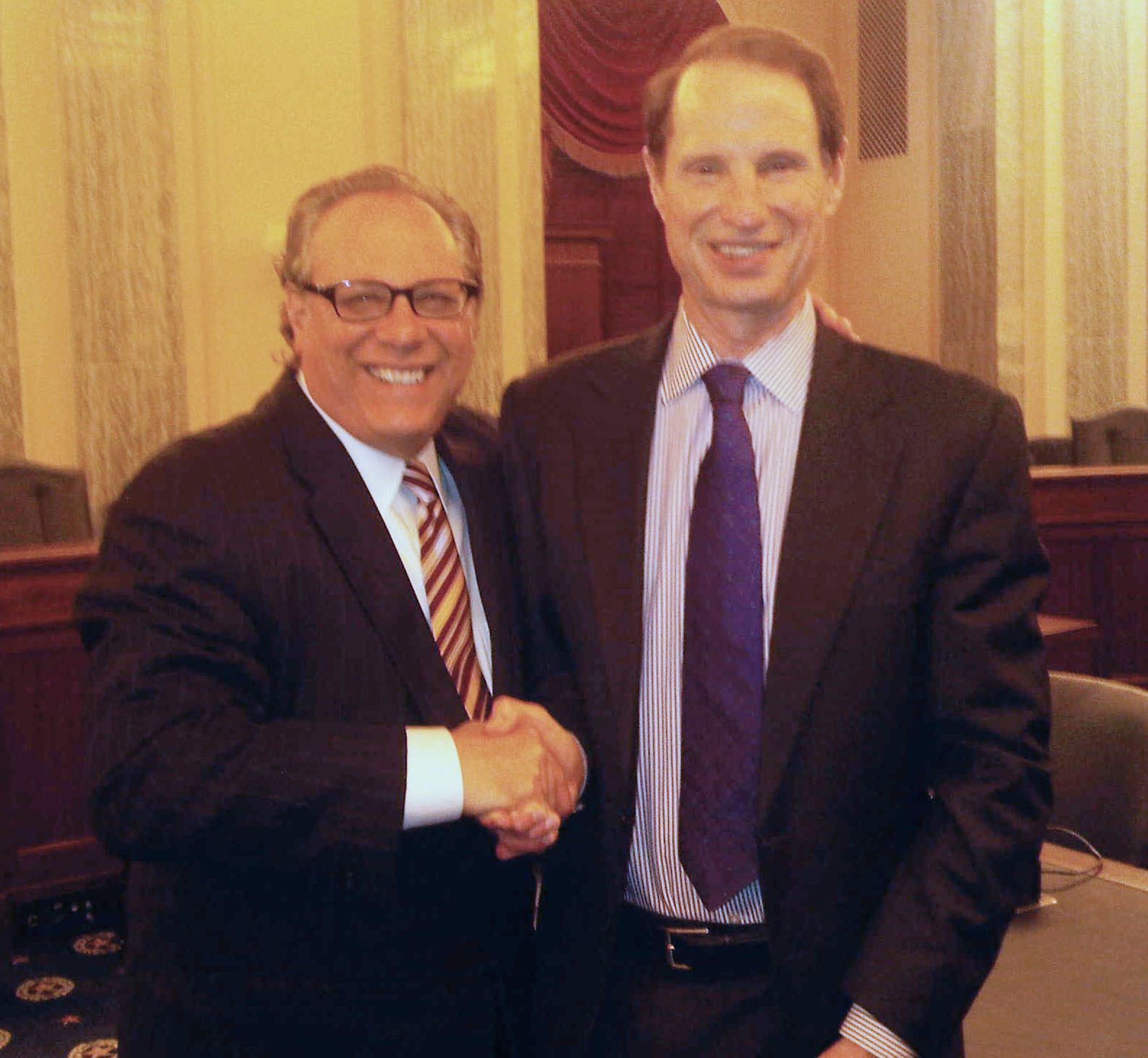
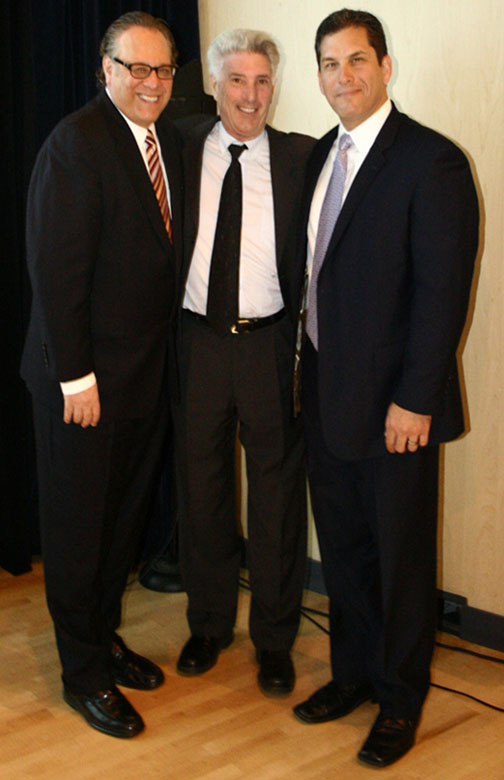
Vincent Caprio, Howard Dean, Nathan Tinker

Vincent Caprio, Governor Howard Dean, Nathan Tinker, PhD

Happy Holidays from the Water Innovations Alliance

Posted on December 23rd, 2010 in Uncategorized | No Comments »

Vincent Caprio, Fabien Cousteau, Mark Modzelewski

Vincent Caprio, Fabien Cousteau, Mark Modzelewski

Summary of NNI at Ten: Nanotechnology Innovation Summit – Part 2

Posted on December 21st, 2010 in Uncategorized | No Comments »

This is a continuation of the program summary from Friday, December 10th at the Nanotechnology Innovation Summit http://www.nsti.org/events/NNI/

The keynote session featured two distinguished speakers, Representative Bart Gordon and Ambassador Richard Russell. Representative Gordon, as most of you know, has been a tireless advocate for in Congress for science, technology, and STEM education generally, and for the NNI in particular. He reminded us that the House of Representatives has passed the NNI Amendments Act twice – as a standalone bill and as part of the America COMPETES Act – but that so far the Senate has failed to follow suit on either lead. Rep. Gordon does feel there is still an outside chance for action this year, with his fellow Tennessean Senator Lamar Alexander championing the effort. Ambassador Russell, formerly Deputy Director of Technology at OSTP and now CEO of VIAforward, reminded us how unusual it is to have a coordinated multiagency initiative, with a growing budget across three administrations and substantial achievements toward stated goals. He attributed the success of the NNI to three factors: nanotechnology is relevant, receives bipartisan support, and has been championed in both the legislative and administrative branches. In reviewing the historical NNI budgets overall and by agency, Ambassador Russell pointed out that EHS research, NIH funding, and DOE funding have grown particularly rapidly.

Three more high-ranking Agency officials addressed Friday’s audience: Dr. Francis Collins, Director of the National Institutes of Health; Dr. Patrick Gallagher, Director of the National Institute of Standards and Technology; and Dr. Subra Suresh, Director of the National Science Foundation. Dr. Collins began his remarks with a return to the topic of international competitiveness, noting that a recent comment in Nature (Follow the money, Wang and Shapira) ranked NIH a gratifying fifth among all nanotechnology research funders internationally – four places behind the National Natural Science Foundation of China. Dr. Collins went on to describe discovery, diagnostic, and therapeutic nanotechnology research sponsored by the various Institutes which make up NIH. While the National Cancer Institute provides about 40% of the NIH total nanotech funding, he also reminded us of the significant research efforts at several other Institutes including the National Institute of Biomedical Imaging and Bioengineering, the National Institute of General Medical Sciences, the National Center for Research Resources, the National Heart Lung and Blood Institute, and his own previous home, the National Human Genome Research Institute. One of the newer therapeutic approaches he discussed was the use of nanoparticles to deliver siRNA, which has proved difficult to administer using conventional methods. Dr. Collins gave an example of new approaches the Institutes are taking to support researchers. By limiting eligibility for the Director’s New Innovator Awards to researchers who have not previously been NIH Principal Investigators, and through an application and review process that emphasizes creativity over detailed budgeting, NIH is trying to make it easier for young researchers to establish independent careers. Fifty-two researchers were funded in the first year of the New Innovator program. Eight of them – 15% of all those selected through a very competitive process – are working in nanotechnology.

Dr. Gallagher gave a very comprehensive presentation of NIST’s role in supporting technology development and advanced manufacturing. NIST’s participation in the NNI covers a range of activities within the agency’s broad mission, such as providing researchers (many of them from industry) access to state-of-the-art nanofabrication and characterization tools, producing standard reference materials, advancing and disseminating nanoscale measurement tools and techniques, and generating data and procedures to support the work of voluntary consensus standards groups. Dr. Gallagher noted that many of these can be loosely categorized as R&D infrastructure, for which he offered the definition “an underlying set of capabilities enabling research to move into practice.” One thing that kind of infrastructure does – with NIST’s EHS-related work being the big example in nano – is allow us to get risk management right. He also touted the Technology Innovation Program’s (TIP) extensive funding for nanomanufacturing R&D and for work on advanced nanomaterials. Dr. Gallagher’s talk was perhaps more focused on the second word in the Summit’s title – Innovation – than any other speaker’s. He singled out the Nanoelectronics Research Initiative as a spectacularly successful example of public-private partnership in innovation. He calculates the NRI leveraging of public funds to date as 73:1, and noted that the initiative, while maintaining its precompetitive nature, is moving on to a new phase. In the NRI’s first five years, a thousand ideas flowered. Now they are starting to select the most promising of those ideas for further development. Finally, he pointed out that three of the four goals in the NNI Strategic plan are squarely in the infrastructure space he described. While these goals are unchanged from 2004 and 2007 Plans, the draft 2010 Plan couples them more deeply into program planning, including calls for deeper international engagement and a full life cycle approach to EHS issues and responsible development. This should improve the community’s ability to manage and compensate risk and allow us to move forward in areas like sustainability and environmental stewardship, which Dr. Gallagher believes to be fundamental strengths of nanotechnology.

Dr. Suresh, who was confirmed as NSF Director less than two months ago, used the “Nano2” report we recently pointed our readers to as the basis for his presentation. If you haven’t read Nanotechnology Research Directions for Societal Needs in 2020 yet, I suggest you download a copy from the web. Dr. Suresh comes to NSF from MIT, where he led a group researching the mechanical properties of both biological and man-made materials at the nanoscale. He sprinkled insights from his own research throughout his talk. For example he said that the ability to pull individual molecules with calibrated force is now routinely available in commercial instruments. Among the key Nano2 findings Dr. Suresh presented are these:

– The U.S. Federal investment exceeds $12B
– There are >50 nanotechnology-based drugs in clinical trial
– The U.S. market for nanotechnology-enabled products is estimated at $91B for 2009
– 60 countries now sponsor nanotechnology research programs

Looking forward, Dr. Suresh said NSF will continue to sponsor curiosity-based nanoscale science and engineering research while placing additional emphasis on commercialization of nanotechnology and measures to protect the public from any potential hazards.

The Friday company presentations covered nanotechnology innovations in the life sciences and in advanced materials. The life sciences session included Liquidia Technologies’ Joseph Desimone, Omid Farokhzad of BIND Biosciences and Selecta Biosciences, Cerulean Pharma’s Alexandra Glucksmann, and William Moffitt of Nanosphere.

Dr. Desimone holds the position of Science Advisor at Liquidia while continuing to head a major research group at the University of North Carolina, where Liquidia’s PRINT technology was originally developed. PRINT allows Liquidia to create nanoparticles with controlled size, shape, and surface properties. It is being explored for inhaled therapeutics, delivery of a wide variety of drugs, and even some non-medical applications. Liquidia’s leading vaccine candidate is an enhanced flu vaccine, which just entered Phase I clinical trials.

Dr. Farokhzad also has one foot in academia and one in industry. He is a founder of both BIND Biosciences and Selecta Biosciences. BIND is working on targeted delivery of nanoparticles containing anticancer drugs, cardiovascular drugs, or anti-inflammatories. Selecta, like Liquidia, is pursuing novel vaccine strategies, using the separately timed release of antigens, adjuvants, and T-cell memory antigens from engineered nanoparticles. They call these concoctions targeted Synthetic Vaccine Particles, or tSVPs. Dr. Farkhzad said people have been asking why Werner Cautreels would follow up a position as Global Head of R&D at Solvay, which was sold to Abbott earlier this year for $6.6B, with the CEO job at such an early-stage firm. The answer, obviously, is that billion dollar firms start small, and with “top quality investors” and a technical team including MIT’s Robert Langer plus Ulrich von Andrian and Dr. Farokhzad from Harvard Medical School, he thinks this is an interesting one.

Alexandra Glucksmann described two different technologies Cerulean uses to develop nanopharmaceuticals. Cyclodextrin Nanoparticle Technology (CDP), which Cerulean licensed out of Cal Tech, is furthest along. Early studies showed promising clinical activity against difficult-to-treat diseases like non-small-cell lung cancer and pancreatic cancer. Phase 2a clinical trials have just begun recruiting patients with advanced solid tumors. The second technology, Polymeric Nanoparticle Technology (PNP) was developed in-house based on an earlier technology licensed from MIT. Unlike most nanomedicine formulations (including CDP), PNP does not attach a separate targeting entity to the nanoparticle. Instead the particle’s design is optimized to directly target the organ or tumor type of interest. Both technologies feature sophisticated chemistry which gives designers the ability to control the release of drugs conjugated to a polymer backbone. Pharmacokinetics can thus be adjusted to deliver high doses while minimizing side effects. The techniques can be applied to many different types of drugs, including both small molecules and more challenging peptides or si-RNAs. Preliminary studies suggest that docetaxel, a very commonly used chemotherapy, accumulates in tumors at 20x the conventional rate when delivered via PNP.

Nanosphere CEO William Moffitt was the diagnostician in the life sciences session. Nanosphere’s detection products stem from Chad Mirkin’s work at Northwestern University. The company has raised over $200M in public and private funds, including early support from both NIH and NSF, and went public in 2007. Their technologies can be applied for direct genomic detection or ultrasensitive detection of proteins. It is being developed for point-of-use diagnostics, in hospitals, doctors’ offices, etc. Current technology for genomic detection, based on the polymerase chain reaction (PCR) is too sophisticated and expensive for many potential sites. It is only available in about 10% of U.S. hospitals. Nanosphere believes their tools can be used much more widely. Currently the most expensive consumable part of their Verigene system is the plastic test cartridge. That cost will go down to less than the price of a latte once production quantities are scaled up. Two application examples Mr. Moffitt discussed are testing a patient’s ability to metabolize the anticlotting drug Plavix (which is ineffective for 30% of patients) and early detection of bloodstream infections. Nanosphere’s instruments cut test time from 3 days to a few hours, and they can pinpoint the specific agent of infection. This could significantly reduce sepsis and death due to hospital-acquired infections. Mr. Moffitt considers PCR and ELISA (Enzyme-linked immunosorbent assay) to be the two most important medical diagnostic developments of the last half-century. Nanosphere’s products and similar technologies can improve on both of these workhorses, with better performance, higher speed, and ultimately lower cost.

The advance nanomaterials session included Professor Zhong Lin Wang of Georgia Institute of Technology; Dr. VJ Sahi, Vice President of Government Affairs for Nanosys; XinRay Systems CEO Dr. Moritz Beckmann; and our good friend Terry Medley, Global Director of Corporate Regulatory Affairs for Dupont. Most of you have probably seen beautiful pictures of zinc oxide nanoflowers, springs, and ribbons from Z.L. Wang’s group. On Friday, Dr. Wang emphasized his group’s work on exploiting the piezoelectric properties of zinc oxide to convert nanoscale motion into useable energy. This work complements the better-known efforts to address our energy problems with nano-enhanced photovoltaic or thermoelectric devices. They have learned to transfer arrays of nanogenerators onto cheap, flexible substrates, and can power a 20 mW LED lamp with a 1 square centimeter array. The ultimate goal is to self-power small networked sensors or similar devices by scavenging mechanical energy from the environment.

Dr. Sahi told us how Nanosys, one of the earliest companies formed to commercialize nanotechnology, has evolved during the first decade of the NNI. Founder Larry Bock’s original vision was to consolidate intellectual property rights related to nanotechnology for electronics and energy applications, and incubate good product ideas. Until 2007, the company looked at platform approaches and considered a wide variety of applications, based on a portfolio of issued or applied-for patents that now exceeds 750. They have since narrowed their focus somewhat. Now they are working in four areas: LED lighting, Lithium ion batteries, solar energy, and flash memory. Nanosys’ lighting technologies include QuantumRail, which uses quantum dots as downconverters to generate a full range of colors from conventional gallium nitride LEDs. LG had a cellphone using this technology for display backlighting at the last Consumer Electronics Show, and will show an expanded range of products at January’s CES. Samsung is also licensing Nanosys technology for lighting. In the battery space, they are trying to find a way to really accelerate the yearly improvement in storage capacity. The battery industry has been delivering 3-5% more capacity a year, but that won’t get us where we need to be for large-scale grid storage or long-range electric vehicles any time soon. So they are working on a composite anode which combines the high capacity of silicon with graphite’s ability to expand and contract without damage during charge/discharge cycles. Some competitors’ anodes lose half their capacity in the first cycle. Preliminary results for the composite anodes are promising, with 7% loss on the first cycle and less than 20% after 1000 cycles in a half-cell.

Dr. Beckmann described XinRay’s use of carbon nanotubes as cold cathode electron sources in a new generation of imaging devices, with applications in both medicine and homeland security. XinRay uses carbon-nanotube-based electron sources to stimulate x-ray production in systems for tomosynthesis, which he called “a poor man’s computed tomography.” Current tomosynthesis systems move a localized source of x-rays to assemble multiple, high-resolution image slices into a composite image with limited 3-D information. By replacing the localized source with a distributed source which can be electrically steered, XinRay can cut the scan time by a factor of 5-10 while reducing image blur. Applications include image guidance for radiation therapy and baggage screening, where XinRay’s system could greatly reduce the need for manual inspection.

Terry Medley closed the materials session with an overview of Dupont’s interests in nanotechnology. As you know, Dupont was an early entrant to the field both in the R&D lab and as a leader in occupational health and safety. Mr. Medley broke down the company’s interest in nanotechnology into 4 areas – nanoscale science and engineering research, nanostructured materials, coatings, and nanoparticles. He described his company’s attitude towards NNI Goal 4 (Responsible Development) as basically unchanged since 2005. That’s when Chad Halliday, who was then CEO, wrote and op-ed for the Wall Street Journal entitled “Let’s get nanotech right.” Of course Terry himself has contributed greatly to that goal, through his work at Dupont, their partnership with Environmental Defense in developing a framework for evaluating the risk profile of a nanomaterial, and his role in the OECD Working Party on Manufactured Nanomaterials’ ongoing work program.

While it was both enjoyable and gratifying to hear all these speakers describe the NNI’s successes to date and how it has nurtured the nanotechnology industry through its infancy, for sheer excitement nothing could compete with the closing, forward-looking session. The four speakers each built a visionary presentation around serious nanoscience. Professor Nathan (Nate) Lewis of Cal Tech started the “Future of Nanotechnology Innovation” session with a talk on energy. Professor Andre Nel of UCLA followed with thoughts on high throughput methods for the toxicology measurements central to EHS studies. Dr. Stan Williams of Hewlett-Packard speculated about fundamentally new electronic devices and computer technology. Finally, Rutledge Ellis-Behnke (MIT and the University of Heidelberg) showed some of the exciting frontiers in nanomedicine.

Professor Nel led off, telling how he is constructing a toolbox to speed the discovery of better, safer engineered nanomaterials. To set the stage for this effort, he reminded us that nanotechnology is not currently known to be responsible for any human disease or serious environmental impact. But… there is definitive evidence of hazard – i.e., the ability to cause harm – for some particular nanomaterials. And the real problem is that for nanomaterials overall we have very incomplete knowledge of hazard. Since the characterization of hazard is essential to robust risk management, it is important to find efficient ways to add make that knowledge more complete. Dr. Nel and his colleagues think they can do this by using the nano-bio interface as a discovery tool. They can perform up to 10,000 observations per day. It is an approach that is similar to how the pharmaceutical industry uses in vitro methods to discover candidate therapeutic agents. If you are interested in more details, Dr. Nel reviewed the subject for the Nano2 report.

Professor Lewis’ talk covered the prospects for various types of solar energy. Energy absorption and conversion processes occur at the nanoscale, so using nanotechnology to manipulate them is a natural. By “fooling” nanoparticle assemblages into behaving like single crystals, for example, companies like Solexant and NanoSolar are already printing thin film photovoltaics. And in the laboratory, multi-junction nanodevices have exceeded the maximum efficiency thermodynamics allows for single-junction cells without concentrators. But those achievements are not enough. Photovoltaics presently only provide 1/1000th of a Terawatt of power to the electricity grid worldwide. On the average, oil, coal, and gas-driven plants generate 1500 times as much, or 1.5 Terawatts. Expanding beyond the electricity sector, biomass (which is solar-fed fuel) supplies 1.4TW of power. Meanwhile fossil fuels supply an average of 11 Terawatts. Even with vast scaleup, PV solar will never become a primary energy source without massive storage capacity – but all the batteries that have ever been made would only store enough energy to absorb the grid’s full output for 10 minutes. These kind of general arguments led Dr. Lewis to look for a different way to use the sun’s light to satisfy our energy needs. The idea, which he is pursuing as the director of the Fuels from Sunlight Innovation Hub which Secretary Chu spoke of earlier, is to borrow from and improve on photosynthesis, which is the way nature captures solar energy. But instead of converting light to carbohydrates, as plants do, the Hub researchers want to convert light directly in to hydrocarbon fuels. Dr. Lewis guaranteed us that they will deliver a working prototype of such an artificial photosynthesis system within 5 years.

Before laying out his vision for the future of computation, Dr. Williams, who is now a Senior Fellow at Hewlett-Packard Laboratories, gave some personal reflections on the beginnings of the NNI. Physical science funding was moribund, he said, in 1998. Grants for nanoscale science had less than a 10% chance of being accepted, and the community was getting desperate. This was the backdrop against which Mike Roco sketched his idea of a national initiative in the nanosciences. Dr. Williams joined Dr. Roco and Dr. Paul Alivisatos in putting together the 1999 report, “Nanotechnology Research Directions”, with significant contributions from Professor George Whitesides. Tom Kalil liked the idea and became its champion within the Clinton Whitehouse, leading to the proposal that nanotech funding should be doubled immediately, and then doubled again, and again over the next decade. Dr. Williams thinks the original “Research Directions” was an accurate, if very optimistic, reflection of the ideas then in the community. And he thinks we have delivered well on these ideas, though perhaps less so in theoretical advances than in experiments, building great facilities, and stimulating an influx of engaged students. At HP Laboratories, Dr. Williams’ Quantum Science Research group represented one half of one percent of the total effort in 2000. Its successor, the Quantum Systems Lab, now represents 18%, and his personal ambition is for it to contribute directly to 20% of HP’s revenue. More than 70 scientists who received their Ph.D.s for NNI-supported research have come to work at QSL as postdocs or staff members. They collaborate with 20+ universities and with NNI centers funded by NIST, DOE, NSF, and others. QSL’s work is divided into three major initiatives, one of which has already developed products. These are sensing solutions, optical switching, and memristor-based electronics. Memristors are a fundamentally new electronic circuit element which can be used for both digital memory and logic devices. Or, they can be operated as analog devices that mimic the behavior of synapses in the brain. HP is making 300 mm wafers covered with memristors now, and interfacing them to conventional CMOS electronics. Since memristors lend themselves to a layered, 3D construction, very dense, fast, low-power computing devices seem within reach. If the scaling goes as planned, the ever-optimistic Dr. Williams predicts that we will have exaflop computers (10^18 floating point operations per second) by 2020, along with networks of a billion sensors. Yet another decade down the line, with memristors operating in analog synaptic mode, he is predicting 10^21 FLOPs and trillion-sensor networks.

The last speaker of the Summit, Dr. Ellis-Behnke looked back well beyond the start of the NNI to set the context for his own predictions of the future. Today, three things you never want to hear from your doctor are:

1. you’re going blind,
2. you’re losing your mind, or
3. you have cancer.

One hundred years ago, it would have been just as devastating to hear that

4. you had an infection.

Can nanotechnology do for the first three list items what antibiotics did for #4? Dr. Ellis-Behnke thinks so. As an example of how, he showed some spectacular work with self-assembled peptide (SAP) materials. In one set of experiments which he calls NanoNeuroKnitting, Dr. Behnke showed a few years ago that surgically blinded hamsters can regenerate the optic nerve connections necessary for sight, if SAP is inserted into the damaged area to form a scaffolding for the nerves along which to grow. In an update to that work, he showed us that by adding another material that disassembles the scaffolding at the right time in the healing process, the results improve dramatically. This same SAP material can be used to quickly stop blood flow from a traumatic injury or an incision. He even showed videos of brain surgery performed through a transparent SAP layer. Since this material works by containing blood but does not cause it to clot, they have found that a very small amount added to banked blood preserves it for 28 days at room temperature. To further demonstrate the versatility of these materials, he showed that they can be used to form an isolation barrier around cancer cells which prevents them from dividing and so halts tumor growth. Dr. Ellis-Behnke noted that manufacturing, and distributing, and regulating medical products which are so radical will be fraught with bottlenecks. If we work through them, items 1, 2, and 3 may soon disappear from the list.

I hope you have enjoyed the summary.

Regards,

Vincent Caprio “Serving the Nanotechnology Community for Over a Decade”
Executive Director
NanoBusinenss Alliance
203-733-1949
vincentcaprio@nynanobusiness.org
www.nynanobusiness.org
www.vincentcaprio.org