Archive for the ‘Uncategorized’ Category

NanoBusiness DC Event Updated Agenda – Nano News

Posted on March 14th, 2010 in Uncategorized | No Comments »

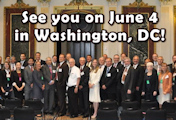
I www.vincentcaprio.org am looking forward to our 9th Annual DC Roundtable starting Monday evening, March 15th. We will be meeting with legislative, executive branch and agency leaders on Tuesday March 16th and Wednesday March 17th. Our updated agenda is below.

As Washington debates Healthcare reform, I would like to share with you a few positive news stories in our Nanotechnology Community.

A123 Systems Under Way With Construction of $600 Million Battery Plant in Michigan, an Industrial Info News Alert
http://www.marketwire.com/press-release/A123-Systems-Under-Way-With-Construction-600-Million-Battery-Plant-Michigan-Industrial-1127154.htm

SouthWest NanoTechnologies Receives Frost Sullivan 2010 North American Technology Innovation Award in Carbon Nanotubes
http://www.nanowerk.com/news/newsid=15124.php

mPower Emergency Illuminator Featured in March 2010 Issue of Popular Mechanics Magazine
http://finance.yahoo.com/news/mPower-Emergency-Illuminator-iw-3710183263.html?x=0&.v=1

Scott Rickert, CEO, Nanofilm
Taking the NanoPulse – Nanotechnology: A Not-Ready-For-Primetime Player?
http://www.industryweek.com/articles/taking_the_nanopulse_–_nanotechnology_a_not-ready-for-primetime_player_21153.aspx?Page=2

PROGRAM
Our DC event begins on Monday evening, March 15th with our Opening Dinner, hosted by K&L Gates, at Lima at 6:30 pm.

Lima
1401 K Street, NW (next door to DC Coast)
Washington DC 20005
202-789-2800

Tuesday, March 16th
8:30am – 10:30am Breakfast with Senator Ron Wyden at the Dirksen Building, Room 562

2:00pm Congressional Nanotechnology Caucus, Co-Chaired by Joel Shapiro, Office of Senator Ron Wyden and Vincent Caprio, Executive Director, NanoBusiness Alliance. The Caucus will be held at the Dirksen Building, Room 562
Moderator: Senator Ron Wyden, (D-OR) http://wyden.senate.gov/

4:30pm Senator Mark Pryor (D-AR) http://www.pryor.senate.gov/public/index.cfm?p=Home

Dinner is from 6:00pm-8:30pm hosted by the Law Firm of McKenna Long & Aldridge. Governor, Howard Dean, will be our Guest Speaker.

The dinner will be held at the Law Offices of McKenna Long & Aldridge:
1900 K Street NW
Washington DC 20006
202-496-7500

Wednesday, March 17th – NanoBusiness Alliance Federal Roundtable
Location:
Offices of Foley & Lardner Conference Center
3000 K Street, N.W.
Washington, D.C.

AGENDA
MEETING OBJECTIVES
– Stimulate dialogue between NanoBusiness Alliance Members and Federal Agencies
– Find out the latest on regulatory policy/impending regulatory actions and federal research
initiatives
– Familiarize NanoBusiness Alliance members with federal product approval authorities and
processes and innovation strategies, with an emphasis on pending developments

8:00am – 8:30am Coffee/Registration

8:30am – 8:45am Welcoming Remarks – Purpose of Meeting
Vincent Caprio, Executive Director, NanoBusiness Alliance

8:45am – 9:45am Regulatory policy movement for nano – Cross-agency and international perspectives
Moderator: Richard A. Canady, PhD DABT, Senior Advisor, McKenna Long & Aldridge LLP

Travis Earles, Assistant Director for Nanotechnology, Office of Science and Technology Policy, Executive Office of the President

Geoff Holdridge, Policy Analyst, National Nanotechnology Coordinating Office, Executive Office of the President

Shaun Clancy, PhD, Director of Product Regulatory Services, Evonik, Chairman of ACC Nanotechnology Panel

9:45am – 10:15am
Celia Merzbacher, PhD, Vice President – Innovative Partnerships, Semiconductor Research Corporation
– The Nanoelectronics Research Initiative: How Industry Gets Value from the NNI through Public-Private Partnership

10:15am – 11:15am Chemical and consumer product risk management policy and regulatory actions
Moderator: Charlie Auer, Charles Auer & Associates, LLC

Lynn L. Bergeson, Founder, Bergeson & Campbell, P.C.

Jeff Morris, National Program Director for Nanotechnology, EPA/ORD
– Sustainable development and EHS research priorities supporting risk management

11:15am – 12:15pm Policy and guidance developments for FDA
Moderator: David Rosen, Partner and Co-chair of the Life Sciences Industry Team, Foley & Lardner LLP. Member of the firm’s Government & Public Policy, and Corporate Compliance & Enforcement Practices and the Health Care, Nanotechnology and Food Industry Teams.

Mitchell Cheeseman, Deputy Director of the Office of Food Additive Safety, Center for Food Safety and Applied Nutrition, FDA
– Food additive and cosmetics guidance

Subhas Malghan, Deputy Director for Program Policy and Evaluation, Office of Science and Engineering Laboratories FDA/CDRH
– Science and regulatory issues relevant to review of products containing nanoscale materials

12:15pm – 1:15pm Lunch

1:15pm – 2:00pm Workplace and Worker Protection Issues
Moderator: Phil Lippel, PhD

David O’Connor, Director, Office of Chemical Hazards (Non-metals) presenting for OSHA

Chuck Geraci, PhD, Coordinator, Nanotechnology Research Center, NIOSH

Kristen M. Kulinowski, PhD, Dept of Chemistry, Center for Biological and Environmental Nanotechnology International Council on Nanotechnology, Rice University

2:00pm – 2:20pm
Lynn L. Bergeson, Founder, Bergeson & Campbell, P.C.
– Effectively Navigating Your Business around Uncertainties: Making the most from careful planning, regulatory awareness, and smart planning.

2:20pm – 2:40pm
Richard A. Canady, PhD DABT, Senior Advisor, McKenna Long & Aldridge LLP
– What did we hear today and what does it mean for business? – Views on compliance, liability and investment based on the regulatory policy movements, from a former insider.

2:40pm – 3:00pm BREAK

3:00pm – 4:00pm Panel Discussion, NNI EHS Research Priorities and their relationship to risk management decision support: Taking a look at the PCAST Working Group on Nanotechnology and National Research Council’s Advisory Committee on “A Research Strategy for Environmental, Health, and Safety Aspects of Engineered Nanomaterials.”
Moderator: Vincent Caprio, Executive Director, NanoBusiness Alliance

Terry Medley, Chair, Expert Group on Nanotechnology, The Business and Industry Advisory Committee to the OECD (and Global Director, Corporate Regulatory Affairs DuPont), and Member of the PCAST Nanotechnology Working Group

Jenifer Sass, Senior Scientist, National Resources Defense Council and member of the PCAST Nanotechnology Working Group

Ray Wassel, Senior Program Officer, Board on Environmental Studies and Toxicology, National Research Council

4:00pm – 4:30pm Lloyd Whitman, Deputy Director of the NIST Center for Nanoscale Science and Technology, “Supporting the Nanotechnology Enterprise from Discovery to Production”

4:30pm – 4:45pm Jim Murday, Director of Physical Sciences, University of Southern California, Washington Office, Industry involvement in nanotechnology workforce and education efforts, science standards

4:45 TBD Wrap up from Administration perspective, relation to innovation focus at the Obama Administration

I hope to see you in DC next week.

Regards,

Vincent Caprio “It’s Green, It’s Clean, It’s Never Seen – That’s Nanotechnology”
www.vincentcaprio.org
Executive Director
NanoBusiness Alliance
203-733-1949
vincentcaprio@nynanobusiness.org

The National Nanotechnology Initiative 2011 Budget

Posted on March 1st, 2010 in Uncategorized | No Comments »

In two weeks I www.vincentcaprio.org will be leading a delegation of Nanotechnology Leaders to Washington DC for our 9th Annual NanoBusiness Alliance DC Roundtable, March 15-17th. We are planning a very busy schedule of DC meetings. Please review our Program http://nanobusiness.org/index.php/public-policy and get ready to speak with Legislative and Agency Officials.

In preparation of our DC event I would like to share with you The National Nanotechnology Initiative 2011 Budget as submitted to President Obama.

The National Nanotechnology Initiative has released its 2011 Supplement to the President’s Budget. In his introductory letter, Presidential Science and Technology Advisor John Holdren notes that “Nanotechnology R&D constitutes a core building block of innovation that will ultimately accelerate job creation and transform many sectors of our economy through commercialization.”

The document gives final tallies for Federal agency investments in nanotechnology fiscal year 2009, estimates of current year investments, and budget requests for FY 2011. It includes descriptions of the current R&D interests of individual agencies as well as some hints of new programs we may see as the NNI enters its second decade.

The NNI budget continues to grow, with $1,701 M reported in 2009 and $1.781 M estimated for 2010. The 2011 request is slightly less – $1,762 M – but is likely to be exceeded when next year’s estimates appear. Well over $500 M in extra allocations through the American Recovery and Reinvestment Act were also distributed in 2009.

The Department of Energy tops the budget tables for the first time, with a $424 M request for 2011. With Recovery Act funding included, it is also easily first in actual expenditures reported for 2009, at $626 M. The Department of Defense and the National Science Foundation still top the estimated 2010 expenditures, with DOE in third place. Two agencies – the Food and Drug Administration and the Consumer Products Safety Commission – appear in the budget tables for the first time as part of the continuing build-up in R&D related to environmental, health, and safety matters. Both agencies have been active NNI participants for several years.

The identification of three signature initiatives in areas that are “ripe for significant advances through close … interagency collaboration” gives us a glimpse of future plans, although few program details are presently available. The topics are nanoelectronics, sustainable nanomanufacturing, and solar energy.

Six agencies have committed a total of $51 M to the Nanotechnology Applications for Solar Energy Initiative, in support of the Administration goal of generating 10% of our nation’s electricity from renewable sources by 2012 and 25% by 2025. As NanoBusiness Alliance members well know, nanotechnology is expected to be a major factor in the widespread commercialization of solar energy, with great prospects for cost reduction, efficiency improvements, and optimizing use of precious materials. It will be interesting to see how this initiative encourages the incorporation of nanoscale materials and devices in both photovoltaic and concentrating solar power systems – the stated goals run the full gamut from improved understanding of the underlying science, through characterization of prototypes, and on to economical manufacturing.

Sustainable Nanomanufacturing gets an initiative of its own, with five participating agencies and $23 M committed to date. The emphasis is on self-assembled systems, a.k.a. the bottom-up approach to nanotechnology. This is a long-term initiative, with a first-decade goal to manufacture, on the industrial scale, systems of “relatively limited complexity” from engineered nanoparticles. A whole host of high-impact applications are mentioned – high-speed communication and computation, solar energy harvesting, waste heat management and recovery, energy storage – but the real emphasis is on developing general manufacturing techniques and then applying them to increasingly complex systems. The inclusion of “sustainable” in the title and the participation of the Environmental Protection Agency tips us off that lifecycle analysis of the materials and processes, up to and including recycling or reclamation, will be expected.

The final signature initiative, Nanoelectronics for 2020 and Beyond, starts with a $55 M commitment from five agencies. This effort shares the basic goals of the Nanoelectronics Research Institute (the current NNI partnership with the Semiconductor Research Corporation) to develop robust U.S. capabilities for manufacturing novel electronic technologies which will take the computing and communications industries beyond the end of the CMOS roadmap. It will expand ongoing NNI R&D in several areas: alternatives to charge-based information processing, combined nanophotonic/nanoelectronic systems, nanotech approaches to quantum information science, and carbon-based electronics devices such as nanotube transistors or this year’s coolest material, graphene. A new university-based facilities network, the National Nanoelectronics Research and Manufacturing Infrastructure, is also planned as part of this initiative.

Finally, the budget supplement notes that an update to the NNI strategic plan is due to Congress in December 2010. The Nanoscale Science, Engineering, and Technology Subcommittee, which oversees the NNI, is open to input from all stakeholders. As the participating agencies consider how nanotechnology stimulates the commercialization and job creation opportunities Dr. Holdren mentioned, let’s make sure the voice of the innovation experts from the nanotechnology business community are heard. One great chance is coming up soon – come to our DC Roundtable on March 16th and 17th. You’ll also find contact information for representatives of all the NNI agencies at the back of the budget supplement, which you can download in its entirety from the http://nano.gov/ homepage or directly from this link http://www.nano.gov/NNI_2011_budget_supplement.pdf.

We look forward to seeing you in Washington for our DC Roundtable March 15-17th. To attend, email vince@nanobusiness.org

Regards,

Vincent Caprio “It’s Green, It’s Clean, It’s Never Seen – That’s Nanotechnology”
www.vincentcaprio.org
Executive Director
NanoBusiness Alliance
203-733-1949
vincentcaprio@nynanobusiness.org

NanoBusiness Alliance Washington DC Roundtable-March 15-17th-Agenda

Posted on February 22nd, 2010 in Uncategorized | No Comments »

Today, I would like to announce that on Tuesday, March 16th at 4:30, we are invited to meet with Senator Mark Pryor (D-AR). Senator Pryor introduced the Nanotechnology Safety Act of 2010 on January 21, 2010 http://www.pryor.senate.gov/public/index.cfm?p=PressReleases&ContentRecord_id=92f252e2-7d7c-453d-8be8-f80c3f764ec8

RESERVE HOTEL TODAY – ROOM BLOCK CLOSING
We have a room block at the Hotel Rouge, rate $229 per night. Please reserve your room today by contacting our Event Manager, Alisa Kronshage at alisa@nanobusiness.org.

Hotel Rouge
1315 16th Street, NW
Washington, DC 20036
Phone: 202-232-8000
Reservations: 800-738-1202
http://www.rougehotel.com/

PROGRAM
Our DC event begins on Monday evening, March 15th with our Opening Dinner (details to follow)

Tuesday, March 16th
8:30am – 1:00pm Meeting at the Offices of K&L Gates, Legislative Meetings

2:00pm Congressional Nanotechnology Caucus
Moderator: Senator Ron Wyden, (D-OR) http://wyden.senate.gov/

4:30pm Senator Mark Pryor (D-AR) http://www.pryor.senate.gov/public/index.cfm?p=Home

Wednesday, March 17th – NanoBusiness Alliance Federal Roundtable
Location:
Offices of Foley & Lardner Conference Center
3000 K Street, N.W.
Washington, D.C.

AGENDA
MEETING OBJECTIVES
– Stimulate dialogue between NanoBusiness Alliance Members and Federal Agencies
– Find out the latest on regulatory policy/impending regulatory actions and federal research
initiatives
– Familiarize NanoBusiness Alliance members with federal product approval authorities and
processes and innovation strategies, with an emphasis on pending developments

8:00am – 8:30am Coffee/Registration

8:30am – 8:45am Welcoming Remarks – Purpose of Meeting
Vincent Caprio, Executive Director, NanoBusiness Alliance

8:45am – 9:45am Regulatory policy movement for nano – Cross-agency and international perspectives
Moderator: Richard A. Canady, PhD DABT, Senior Advisor, McKenna Long & Aldridge LLP

Travis Earles, Assistant Director for Nanotechnology, Office of Science and Technology Policy, Executive Office of the President

Clayton Teague, Director, National Nanotechnology Coordinating Office, Executive Office of the President

Shaun Clancy, PhD, Director of Product Regulatory Services, Evonik, Chairman of ACC Nanotechnology Panel

9:45am – 10:15am
Celia Merzbacher, PhD, Vice President – Innovative Partnerships, Semiconductor Research Corporation
– The Nanoelectronics Research Initiative: How Industry Gets Value from the NNI through Public-Private Partnership

10:15am – 11:15am Chemical and consumer product risk management policy and regulatory actions
Moderator: Charlie Auer, Charles Auer & Associates, LLC

Lynn L. Bergeson, Founder, Bergeson & Campbell, P.C.

Jeff Morris, National Program Director for Nanotechnology, EPA/ORD
– Sustainable development and EHS research priorities supporting risk management

Mary Ann Danello (invited), Associate Executive Director for Health Sciences, Consumer Product Safety Commission
– Nano research at CPSC: Supporting risk management

11:15am – 12:15pm Policy and guidance developments for FDA
Moderator: David Rosen, Partner and Co-chair of the Life Sciences Industry Team, Foley & Lardner LLP. Member of the firm’s Government & Public Policy, and Corporate Compliance & Enforcement Practices and the Health Care, Nanotechnology and Food Industry Teams.

Mitchell Cheeseman, Deputy Director of the Office of Food Additive Safety, Center for Food Safety and Applied Nutrition, FDA
– Food additive and cosmetics guidance

Subhas Malghan, Deputy Director for Program Policy and Evaluation, Office of Science and Engineering Laboratories FDA/CDRH
– Science and regulatory issues relevant to review of products containing nanoscale materials

12:15pm – 1:15pm Lunch

1:15pm – 2:00pm Workplace and Worker Protection Issues
Moderator: Phil Lippel, PhD

David O’Connor, Director, Office of Chemical Hazards (Non-metals) presenting for OSHA

Chuck Geraci, PhD, Coordinator, Nanotechnology Research Center, NIOSH

Kristen M. Kulinowski, PhD, Dept of Chemistry, Center for Biological and Environmental Nanotechnology International Council on Nanotechnology, Rice University

2:00pm – 2:20pm
Lynn L. Bergeson, Founder, Bergeson & Campbell, P.C.
– Effectively Navigating Your Business around Uncertainties: Making the most from careful planning, regulatory awareness, and smart planning.

2:20pm – 2:40pm
Richard A. Canady, PhD DABT, Senior Advisor, McKenna Long & Aldridge LLP
– What did we hear today and what does it mean for business? – Views on compliance, liability and investment based on the regulatory policy movements, from a former insider.

2:40pm – 3:00pm BREAK

3:00pm – 4:00pm Panel Discussion, NNI EHS Research Priorities and their relationship to risk management decision support: Taking a look at the PCAST Working Group on Nanotechnology and National Research Council’s Advisory Committee on “A Research Strategy for Environmental, Health, and Safety Aspects of Engineered Nanomaterials.”
Moderator: Vincent Caprio, Executive Director, NanoBusiness Alliance

Terry Medley, Chair, Expert Group on Nanotechnology, The Business and Industry Advisory Committee to the OECD (and Global Director, Corporate Regulatory Affairs DuPont), and Member of the PCAST Nanotechnology Working Group

Jenifer Sass, Group,Senior Scientist, National Resources Defense Council and member of the PCAST Nanotechnology Working Group

Ray Wassel, Senior Program Officer, Board on Environmental Studies and Toxicology, National Research Council

4:00pm – 4:30pm Keynote finale – Innovation focus at the Obama Administration

4:30pm Adjourn

More details on the Agenda to follow and please make your DC plans soon with alisa@nanobusiness.org.

Regards,

Vincent Caprio “It’s Green, It’s Clean, It’s Never Seen – That’s Nanotechnology”
www.vincentcaprio.org
Executive Director
NanoBusiness Alliance
203-733-1949
vincentcaprio@nynanobusiness.org

NbA Washington DC Roundtable Registration Form

NanoBusiness Alliance Congratulates 5 Nanotechnology PECASE Winners

Posted on February 17th, 2010 in Uncategorized | No Comments »

Dean Kamen http://www.dekaresearch.com/index.shtml, Inventor, Scientist, PhD, was our Keynote Speaker at our September 2009 Conference. Mr. Kamen’s central premise was that America is a celebrity driven culture and children and adults cannot name one living scientist or engineer but can name 10 celebrities in seconds. Mr. Kaman’s 90-minute speech http://www.usfirst.org/ hit me hard and I www.vincentcaprio.org have taken up his challenge to highlight young leaders in the Nanotechnlogy community.

This week, we continue our look at some of the rising stars of nanoscience. Let’s jump ahead to the most recent group of Presidential Early Career Award for Scientists and Engineers (PECASE) recipients, who were honored at the White House on January 13th (photo attached). Among those selected for awards were nanotechnologists nominated by the Department of Energy, the National Institutes of Health, the Department of Defense, and the Department of Commerce.

Gary Baker, a chemist at the Department of Energy’s Oak Ridge National Lab, was nominated by DOE for pioneering work in synthesizing new environmentally sustainable solvents and exploring their applications. Baker and his colleagues are developing low-vapor-pressure solvents, known as ionic liquids, which could replace less “green” fluids in a wide range of chemical processes including the production of energy from biomass and fuel cell electrolysis. Nanotechnology enters Baker’s work in two different ways. First, he employs ionic liquids as part of a new technique for making uniform-sized nanoparticles called the melt-emulsion-quench approach. This can be used to synthesize a variety of magnetic and non-magnetic materials useful for drug delivery, magnetic resonance imaging, and protein separations. Second, as part of his program to better characterize ionic liquids, Baker has developed innovative nanostructured sensors with unique optical properties. Baker’s group uses these sensors for precision spectroscopic measurements using techniques such as surface-enhanced Raman spectroscopy. These sensors could find many other uses, for example in monitoring catalytic processes or performing bioassays in medical laboratories.

Jeffrey Neaton also represents the Department of Energy, through the Lawrence Berkeley National Laboratory. Neaton directs the Theory of Nanostructured Materials Facility at the LBNL’s Molecular Foundry. Neaton’s computational support group provides access to Nano, a 432-processor Linux cluster with a theoretical peak performance of 3.1 Teraflops. Nano is devoted exclusively to nanoscience projects undertaken by the Foundry’s staff and participants in the lab’s extensive program for outside users. Neaton himself has performed important calculations of electron flow in nanowires, molecular transistors, and other nanoscale electronic or optical devices. He works closely with experimental colleagues – both Foundry staff and users from industry or academia. Their goal is to simulate the fundamental physics of devices which combine inorganic and organic materials in nanostructures, and to see how mechanical strain and interfacial phenomenon effect device performance. By leading to a better understanding of the behavior of nanoelectronic and nanophotonic devices, this work could help us engineer practical, inexpensive solar cells, solid state lighting products, and low-power high-performance electronics.

Bruce J. Hinds, nominated for PECASE by the National Institutes of Health, is the William Bryan Associate Professor of Chemical and and Materials Engineering at the University of Kentucky. Hinds’ award recognizes his efforts to exploit the properties of carbon nanotubes to improve the delivery of drugs via skin patches. Hinds has developed techniques for aligning carbon nanotubes across a thin membrane, and for precisely placing chemical groups at the tube ends. Water can flow through the aligned nanotubes virtually friction free, a surprising effect that several groups are exploring for low-pressure filtration systems. Hinds, on the other hand, has developed a method to precisely functionalize the ends of the nanotubes, allowing him to control the passage of various molecules through his membranes. Recognizing that this kind of selective transport mimics the biological action of protein channels, Hinds went one step further and incorporated electrostatic control elements to simulate a gated ion channel. NIH’s National Institute on Drug Abuse is supporting Hinds’ work to develop these electrically controllable membranes into a better system for delivering drugs through the skin in a highly controllable fashion. Initial efforts focused on three drugs are already widely used with conventional transdermal patches: Clonidine (for opiate withdrawal therapy), fentanyl (for pain management), and, perhaps best-known, nicotine (for smoking cessation).

Seth R. Bank, an Assistant Professor in the Electrical and Computer Engineering Department at the University of Texas, was nominated by the Department of Defense along with Rashid Zia of Brown University (profiled in our January 15th newsletter). Professor Bank works with electronic devices built from III-V semiconductors, which he grows using the now-standard technique of molecular beam epitaxy. But by adding a decidedly non-standard component to the mix – semi-metal nanoparticles – he can modify key electronic parameters of the materials in desirable ways. Increased phonon scattering can be used to create better thermoelectric generators, for example, by decreasing thermal conductivity. In just over three years at UT, Bank has already established an advanced MBE facility, demonstrated tunnel junctions with 225 times the current of the best previous devices, and collaborated with a solar industry start-up on using nanocomposite semiconductors to improve the interlayer connections in multijunction photovoltaic cells. He is also building mid-infrared solid state lasers and Terahertz radiation sources, exploring parts of the electromagnetic spectrum of great interest for communications, remote sensing, and medical applications.

Dean DeLongchamp, a chemical engineer at the National Institute of Standards and Technology, was nominated by the Department of Commerce for his work to improve organic devices for flexible circuits, displays, solar cells, and energy storage. DeLongchamp is developing a suite of measurement techniques which allow scientists to measure the microscopic and nanoscopic structure of an experimental device design and correlate these features with processing parameters and ultimate performance. DeLongchamp’s personal specialty, Near Edge X-ray Absorption Fine Structure spectroscopy, or NEXAFS, utilizes the bright and highly focused X-ray beams from a synchrotron light source to determine the composition and orientation of molecules in an organic film. The measurement suite he is developing at NIST also includes scanned probe microscopy, electron microscopy, polarized light spectroscopy at X-ray, visible, and infrared wavelengths, and light scattering. Recently, DeLongchamp worked closely with Merck scientists to show how layer tilt and the interleaving of side chains contribute to high carrier mobilities in films of the organic semiconductor pBTTT. Other industrial collaborators including Corning, IBM, and Plextronics are using similar studies to guide the development of materials and processing techniques for organic electronic applications.

We hope to see you in Washington DC http://nanobusiness.org/index.php/public-policy March 15-17th for our Annual DC Event. Attached you will find a registration form. To register please email alisa@nanobusiness.org.

Regards,

Vincent Caprio “It’s Green, It’s Clean, It’s Never Seen – That’s Nanotechnology”
www.vincentcaprio.org
Executive Director
NanoBusiness Alliance
203-733-1949
vincentcaprio@nynanobusiness.org

NbA Washington DC Roundtable Registration Form
Obama_PECASE

NanoBusiness Alliance -1st QTR Financial Market Update -Tesla files S-1

Posted on February 5th, 2010 in Uncategorized | No Comments »

On September 9, 2009 at our 8th Annual NanoBusiness Alliance Conference, Scott Livingston, CEO of Livingston Securities http://www.livingstonsecurities.com/ spoke of the future of Investing in Nanotechnology. Livingston said, “If A123 http://www.a123systems.com/ has a successful public offering this month, then I see the IPO window opening for other Nanotechnology based companies starting in the 1st Quarter 2010.” A123 went public on Sept. 24th, 2009 at $13.50 per share. As of today 02-02-10 it closed at $17.88.

Last Friday, our friends in the Nanotechnology Community, Tesla Motors http://www.teslamotors.com/, filed their S-1 http://sec.gov/Archives/edgar/data/1318605/000119312510017054/ds1.htm. At present time, there are 7 companies in registration for IPOs. These 7 companies, who have attended NanoBusiness Alliance events, are collectively backed by over 2 dozen Venture Capital Funds.

In addition to Tesla Motors the other 6 companies are in the niches brought to you by the Science of Nanotechnology:

1) Drug Delivery
2) Personalized Medicine
3) CIGS Solar Cells
4) Regenerative Medicine
5) Enhanced MRI
6) Plug-In Hybrids

Our members should note we have 7 companies that are associated with our Nanotechnology Community that are currently in registration.

Yes, the 1st Quarter of 2010 is an exciting and robust period for investing in Nanotechnology Companies.

I would like to share with you an article by Scott Rickert, President & CEO of Nanofilm http://www.nanofilmtechnology.com/index.aspx?bhcp=1 and NanoBusiness Alliance Board Member.
Taking the NanoPulse – 2010: Welcome to the Nano Decade http://www.industryweek.com/articles/taking_the_nanopulse_–_2010_welcome_to_the_nano_decade_20897.aspx

IMPORTANT REMINDER
Our 9th Annual Washington DC Roundtable Event, hosted by the NanoBusiness Alliance, is being held on Monday, March 15th – Wednesday, March, 17th. We have a room block at the Hotel Rouge, rate $229 per night. Please reserve your room today by contacting our Event Manager, Alisa Kronshage at alisa@nanobusiness.org.

Hotel Rouge
1315 16th Street, NW
Washington, DC 20036
Phone: 202-232-8000
Reservations: 800-738-1202
http://www.rougehotel.com/

Our DC event begins on Monday evening, March 15th with our Opening Dinner.
Tuesday, March 16th – Legislative Meetings, Tuesday Evening Dinner
Wednesday, March 17th – Agency Meetings

I have attached a Registration Form NbA Washington DC Roundtable Registration Form for our DC event. As a benefit of membership in the NanoBusiness Alliance, there is no charge for our DC event. There is a $400 fee for non-members.

I am looking forward to seeing you in Washington DC to discuss a wide range of issues from Investing, Government R&D and the Reauthorization of the NNI http://www.nano.gov/.

Regards,

Vincent Caprio “It’s Green, It’s Clean, It’s Never Seen – That’s Nanotechnology”
www.vincentcaprio.org
Executive Director
NanoBusiness Alliance
203-733-1949
vincentcaprio@nynanobusiness.org


US Commerce Dept’s NIST Invests up to $71 Million-9 Nanotechnology Award Winners

Posted on January 29th, 2010 in Uncategorized | No Comments »

On December 15, 2009, The U.S. Commerce Department’s National Institute of Standards and Technology (NIST) announced up to $71 million in funding through its Technology Innovation Program (TIP) for 20 new cost-sharing projects that will support innovative, high-risk research in new technologies that address critical national needs. The new projects will include developing unmanned, hovering aircraft for bridge inspections, a high-speed sorting system for recycling aerospace metals, and nanomaterials for advanced batteries, among other projects. The awards will be matched by other funding sources to achieve nearly $150 million in new research over the next two to five years.

“President Obama is leading an effort to drive economic growth and solve national problems by deploying a 21st Century economy,” U.S. Commerce Deputy Secretary Dennis Hightower said. “These new projects will develop new technology and material that will play a critical role in modernizing infrastructure and developing the manufacturing sector across the country.”

TIP is a merit-based, competitive program that provides cost-shared funding for research projects by single small- or medium-sized businesses or by joint ventures that also may include institutions of higher education, nonprofit research organizations and national laboratories.

The 20 projects announced today were selected from a TIP competition announced on March 26, 2009, seeking projects addressing two broad areas of national interest:

  • The practical application of advanced materials including nanomaterials, advanced alloys and composites in manufacturing
  • The monitoring or repair of major public infrastructure systems, including water systems, dams and levees, and bridges, roads and highways.

TIP focused on developing new materials based on nanotechnology, advanced composites and so-called “superalloys” or smart materials – and expanding the capacity to incorporate these materials into new products – because many experts consider accelerated development of these advanced materials critical to potential growth in U.S. manufacturing.

As a nonregulatory agency of the U.S. Department of Commerce, NIST promotes U.S. innovation and industrial competitiveness by advancing measurement science, standards and technology in ways that enhance economic security and improve our quality of life. Additional information on the Technology Innovation Program is available at www.nist.gov/tip.

See the list of our 9 Nanotechnology 2009 TIP project awards and links to additional details for each below.

Technology Innovation Program 2009 R&D Awards: Advanced Materials in Manufacturing

Production of Low-Cost, High-Quality Metallic and Semiconducting Single Wall Carbon Nanotube Inks
http://tipex.nist.gov/tippb/prjbriefs/prjbrief.cfm?ProjectNumber=090021

  • Brewer Science, Inc. (Rolla, Mo.) (Lead)
  • Southwest Nanotechnologies, Inc. (Norman , OK)

Functionalized Nano Graphene for Next-Generation Nano-Enhanced Products
http://tipex.nist.gov/tippb/prjbriefs/prjbrief.cfm?ProjectNumber=090027

  • Angstron Materials, LLC (Dayton, Ohio)

Transformational Casting Technology for Fabrication of Ultra-High Performance Lightweight Aluminum and Magnesium Nanocomposites
http://tipex.nist.gov/tippb/prjbriefs/prjbrief.cfm?ProjectNumber=090033

  • The Board of Regents of the University of Wisconsin System (Madison, Wis.) (Lead)
  • Eck Industries, Inc. (Manitowoc, Wis.)
  • Nanostructured & Amorphous Materials, Inc. (Houston, Texas)
  • Oshkosh Corporation (Oshkosh, Wis.)

High-Speed, Continuous Manufacturing of Nano-Doped Magnesium Diboride Superconductors for Next-Generation MRI Systems
http://tipex.nist.gov/tippb/prjbriefs/prjbrief.cfm?ProjectNumber=090045

  • Hyper Tech Research, Inc. (Columbus, Ohio)

PRINT Nanomanufacturing: Enabling Rationally Designed Nanoparticles for Next-Generation Therapeutics
http://tipex.nist.gov/tippb/prjbriefs/prjbrief.cfm?ProjectNumber=090049

  • Liquidia Technologies, Inc. (Durham, N.C.)

Silicon Nanowire Production for Advanced Lithium-Ion Batteries
http://tipex.nist.gov/tippb/prjbriefs/prjbrief.cfm?ProjectNumber=090052

  • Amprius, Inc. (Menlo Park, Calif.)

High Volume Production of Nanocomposite Electrode Materials for Lithium-Ion Batteries
http://tipex.nist.gov/tippb/prjbriefs/prjbrief.cfm?ProjectNumber=090163

  • A123Systems, Inc. (Ann Arbor, Mich.)

High-Risk, Low-Cost Carbon Nanofiber Manufacturing Process Scale-Up
http://tipex.nist.gov/tippb/prjbriefs/prjbrief.cfm?ProjectNumber=090174

  • eSpin Technologies, Inc. (Chattanooga, Tenn.)

Development and Scale-Up of Nanocomposites with Sub-10nm Particles
http://tipex.nist.gov/tippb/prjbriefs/prjbrief.cfm?ProjectNumber=090175

  • Pixelligent Technologies, LLC (College Park, Md.) (Lead)
  • Brewer Science, Inc. (Rolla, Mo.)

Kudos to our 9 Nanotechnology Community Award Winners.

Regards,

Vincent Caprio “It’s Green, It’s Clean, It’s Never Seen – That’s Nanotechnology”
www.vincentcaprio.org
Executive Director
NanoBusiness Alliance
203-733-1949
vincentcaprio@nynanobusiness.org
NanoBusiness Alliance-US International Trade Commission Hearing-DC, Feb. 9th

Posted on January 25th, 2010 in Uncategorized | No Comments »

For our NanoBusiness Alliance Members and Nanotechnology Community at large, I www.vincentcaprio.org would like to share an opportunity in regard to your export strategy. I will be in Washington, DC on February 9th to attend the U.S. International Trade Commission hearing.

The United States Trade Representative (USTR) http://www.ustr.gov/ has asked the U.S. International Trade Commission (Commission) http://www.usitc.gov/to conduct a 3-phase study looking at the ability of small and medium-sized companies (SMEs) to export and what trade barriers they may face. In its request letter to the Commission, the USTR stated that “As U.S. trade policies strive to open markets, enforce trade agreements, and support the healthy expansion of trade, it is critical that SMEs benefit as much as possible from exporting goods and services to foreign markets and contribute as much as they can to overall U.S. export growth. To achieve this goal, certain constraints to exports by these firms may need to be removed.” The Commission would like to hear from nanotechnology SMEs who export about what barriers they may have faced in exporting, if the barriers would be considered to be disproportionate to the SMEs versus their larger counterparts, and the role SMEs may play in regard to indirect exports.

Companies and trade organizations have three ways to contribute: (1) they can appear at the hearings (Washington, DC: February 9, 2010, Courtroom B, USITC Building, 500 E Street SW; St. Louis, MO: March 10; and Portland, OR: March 12) but must file requests to appear by the deadline (e.g., January 26, 2010, for the Washington, DC, hearing); (2) they can file a written submission (deadline March 26, 2010), in lieu of or in addition to appearing at the hearing; and (3) they can contact Commission staff. If you have any questions then, please contact Elizabeth Nesbitt, U.S. International Trade Commission, 202-205-3355, elizabeth.nesbitt@usitc.gov.

I have attached two documents outlining the program. Please note the deadline to be considered to speak at the February 9th hearing is Tuesday, January 26th. Once again, please contact Elizabeth Nesbitt, U.S. International Trade Commission, 202-205-3355, elizabeth.nesbitt@usitc.gov.

Regards,

Vincent Caprio
www.vincentcaprio.org
Executive Director
NanoBusiness Alliance
vincentcaprio@nynanobusiness.org

Press release 332 SME 2 inst-1
USTR Request Letter-1

NanoBusiness DC Roundtable, Mar.15-17th – Tomorrow’s Nanoscience Leaders

Posted on January 15th, 2010 in Uncategorized | No Comments »

With The Martin Luther King weekend Holiday upon us I www.vincentcaprio.org was reading about the life of Dr. King. One quote from Dr. King which is apropos to our current state of affairs is the following.

“The ultimate measure of a man is not where he stands in moments of comfort and convenience, but where he stands at times of challenge and controversy.”
– Martin Luther King, Jr.

The NanoBusiness Alliance has been committed to innovation and keeping America competitive since our inception in 2001. Today, I would like to announce our 9th Annual Washington Roundtable which will be held March 15-17th. We will be in Washington DC starting Monday evening with a networking dinner and reception. Members please Email alisa@nanobusiness.org to register. To join the NanoBusiness Alliance please Email vince@nanobusiness.org to discuss.

The innovative products developed by our NanoBusiness Alliance members often begin as ideas in a research lab. Yesterday’s nanoscience discoveries drive today’s breakthrough nanotechnology. Over the next few months, we are going to try to sneak a peek at tomorrow’s technology by checking out what the scientists are working on right now.

I will be bringing you short profiles of nanoscientists working across the many different disciplines that contribute to the excitement of our field. Of course we will be highlighting some of the big names, but we are going to start on a different track – by featuring a group of highly distinguished younger scientists.

Last week I talked about the NanoBusiness Alliance’s Talent Program http://www.nanobusinesstalent.org/ for gifted high school students. The first group of nanoscientists we are going to look at are standouts a decade or more further down the career path, at the point where they are just beginning independent research careers. Each year, the White House asks U.S. R&D agencies to nominate young scientists whose pursuit of innovative research and commitment to community service are already apparent. From these nominees, the Office of Science and Technology Policy selects the winners of the Presidential Early Career Awards for Scientists and Engineers, or PECASE.

I was pleased to discover that nanotechnology has been on PECASE winner’s research agenda at least since 1999, when President Clinton honored Kathryn “Kam” Moler of Stanford University. Moler was nominated by the Department of Defense for her work in developing new experimental methods to probing magnetism on the nanoscale, and for using these new tools to study materials such as superconductors that have important uses in critical Air Force applications like high-power microwave sources.

In the decade since, Kam’s star has continued to rise. In addition to leading a very successful research group http://www.stanford.edu/group/moler/ utilizing local magnetic probes, she is now the director of the Center for Probing the Nanoscale http://www.stanford.edu/group/cpn/index.html, a National Science Foundation-funded center where Stanford and IBM scientists continue to improve scanning probe methods for measuring, imaging, and controlling nanoscale phenomena. Of course they have a great legacy from which to draw. Many people consider the invention of the scanning tunneling microscope – which brought IBM scientists Gerd Binnig and Heinrich Rohrer the 1986 Nobel Prize in Physics – a seminal event in the history of nanotechnology. Binnig and his longtime colleague Christoph Gerber, then based at IBM’s Zurich laboratory, spent 1986 visiting Stanford and IBM’s Almaden laboratory in San Jose. Their collaboration with Calvin Quate at Stanford led to the first and perhaps still most successful of the STM’s progeny, the Atomic Force Microscope.

We are going to take a look at one more recent PECASE recipient this week. Rashid Zia is an Assistant Professor of Engineering at Brown University and a member of the Institute for Molecular and Nanoscale Innovation http://www.brown.edu/Departments/IMNI/. His works on nanophotonics is supported by both NSF and the Air Force Office of Scientific Research. On AFOSR’s recommendation, he was honored among the 2008 PECASE winners. Rashid describes his work as melding an optical physicist’s interest in how light behaves in nanostructured materials with an electrical engineer’s desire to develop useful new devices. So he and his students model, build, and characterize subwavelength photonic devices, often based on rare-earth compounds. He says these plasmonic devices can combine the speed of optics with the nanoscale size we have come to expect in the electronics world. One of the group’s goals is to improve LED lighting and hasten our transition away from inefficient incandescent or mercury-containing fluorescent bulbs – a great example of my green, clean, and never seen theme for nanotechnology.

More PECASE stories will follow in the coming weeks, along with some profiles of other well-known nanoscientists. Please send me feedback on who you would like to see included. Who do you think are the rock stars of nanoscience? Please email your nominees to vince@nanobusiness.org.

Let’s take a moment on Dr. King’s birthday to commit to science and math education for the students of America.

Regards,

Vincent Caprio “It’s Green, It’s Clean, It’s Never Seen – That’s Nanotechnology”
www.vincentcaprio.org
Executive Director
NanoBusiness Alliance
vincentcaprio@nynanobusiness.org

NanoBusiness Talent Program-President Obama to unveil $250 Million math, science program

Posted on January 11th, 2010 in Uncategorized | No Comments »

President Barack Obama on Wednesday unveiled a $250-million teacher training program aimed at improving math and science education nationwide http://politicalticker.blogs.cnn.com/2010/01/06/obama-unveils-250-million-math-science-program/.

The effort, which aims to train more than 10,000 new teachers over five years, is part of the White House’s “Educate to Innovate” campaign – a series of programs and grants designed to address the growing gap between the United States and other countries in the fields of science, technology, engineering and mathematics (STEM).

The NanoBusiness Alliance is delighted that the Obama Administration has made this commitment to tomorrow’s scientists and engineers. I www.vincentcaprio.org look back over the last 30 years at how Technology has driven our economy. America continues to lead the World in Technology and Innovation and we must invest in our young people to stay competitive. Investment in Education and Technology is an issue we must all agree on for the future of America.

The NanoBusiness Alliance has made a significant commitment to students interested in nanotechnology. Entering our third year, the NanoBusiness Talent Program www.nanobusinesstalent.org has been connecting future scientists and high-tech companies by arranging summer internships for high school students at nanotechnology companies. Fellowships are intended for high school students that are completing their junior or senior years and they are named Talent fellows after completing a 9-week program.

The NanoBusiness Alliance has determined that nanotechnology will account for over 10 million jobs worldwide by 2015. Total revenues from products incorporating nanotechnology will reach $2.5 trillion by 2010. The Talent Program contributes to research and innovation in emerging technology as these students move forward in their careers.

The recipients this year included:

  • Abigail Chao – Illinois Math and Science Academy – Advanced Diamond Technologies
  • Kevin Chen – Illinois Math and Science Academy – Ohmx
  • Zachary Epstein – Adlai E. Stevenson High School – NanoIntegris
  • Yifei Huang – Illinois Math and Science Academy – NanoInk
  • Kai-Le Moy – Glenbrook North High School – Questek
  • Michael Pearlman – New Trier High School – Nanosphere
  • Paul Schied – Lyons Township High School – Nanotope
  • Fangzhou (Jimmy) Yu – Adlai E. Stevenson High School – NanoInk

Advocates for engineering who participated in the 2009 program include:

The Talent Program will take place again this summer. Attached is our Winter 2010 Newsletter. For more information on the program or to participate in 2010, please contact Lesley Hamming, Program Director at lesley@nanobusinesstalent.org.

Regards,

Vincent Caprio “It’s Green, It’s Clean, It’s Never Seen – That’s Nanotechnology”
www.vincentcaprio.org
Executive Director
NanoBusiness Alliance
vincentcaprio@nynanobusiness.org

2 Nanotechnology Opportunities-Department of Energy, January 2010-Happy New Year!

Posted on January 4th, 2010 in Uncategorized | No Comments »

My post a few weeks ago www.vincentcaprio.org on the Advanced Research Project Agency – Energy http://www.vincentcaprio.org/2009/11 drew a lot of interest, so here is an important update. On December 7th, while many of us were in NYC at the Livingston Nanotechnology Conference http://www.livingstonsecurities.com/livingston_conference/index.php, Steven Chu, Secretary of Energy http://www.energy.gov/organization/dr_steven_chu.htm announced that American Recovery and Reinvestment Act funding will be used to support a second, $100M round of awards to be made early next year. Preliminary proposals are being accepted through 5 p.m. EST on January 15th, 2010.

Unlike the broad first-round solicitation, the current Funding Opportunity Announcements call for game-changing ideas in just three specific areas. The good news is that two of these areas are natural fits for the nanotechnology community:

Batteries for Electrical Energy Storage in Transportation (BEEST) (DOE- FOA-0000207) https://arpa-e-foa.energy.gov/FoaDetailsView.aspx?foaId=429d5747-2cb6-4f52-8ac1-e5e829f4c6ce This announcement calls for proposals to develop inexpensive, ultrahigh energy density batteries specifically for electric vehicles, to help shift our transportation energy supply from oil to the mix of mostly domestic sources that powers our electric grid. The key system-level specs, derived from the “aggressive long term goals” of the U.S.Automotive Battery Consortium (USABC) http://www.uscar.org/guest/view_team.php?teams_id=12, are mass energy density exceeding 200 Wh/kg, volumetric energy density exceeding 200 Wh/liter, and cost below $250/kW. Note that improvements to conventional Li-Ion cells or other technologies receiving R&D funding from DOE’s Office of Vehicle Technology or USABC are specifically excluded. Instead, the agency is looking for alternative materials to replace carbon-based anodes and Li-intercalation cathodes; new architectures; and manufacturing approaches that go beyond the current slurry coating based process.

Innovative Materials & Processes for Advanced Carbon Capture Technologies (IMPACCT) (DOE-FOA-0000208) https://arpa-e-foa.energy.gov/FoaDetailsView.aspx?foaId=e8551207-6354-4bbe-8978-1373398af9ca This announcement is aimed at cleaning up the coal-fired power plants that currently meet half our country’s electricity needs by developing innovative ideas for capturing carbon emissions. Proposers should show that their innovative materials or new capture processes are ready to move beyond the basic research stage while laying out a development plan that will change the economics of carbon capture. Specific interests include low-cost catalysts and materials that can tolerate exposure to caustic flue gas. This program is meant to complement more conventional Carbon Capture http://fossil.energy.gov/programs/sequestration/capture/index.html and Sequestration http://fossil.energy.gov/programs/sequestration/index.html development efforts sponsored by DOE’s Office of Fossil Energy http://fossil.energy.gov/index.html.

Some of you may also have expertise in metabolic engineering or synthetic biology, the technologies identified as appropriate for the third FOA,
Electrofuels (DOE- FOA-0000206) https://arpa-e-foa.energy.gov/FoaDetailsView.aspx?foaId=d95b8b45-4738-47f6-a553-2db79c13437e. Here the agency is looking to lessen our dependence on oil and reduce carbon emissions by using microorganisms to convert carbon dioxide to liquid transportation fuels, with chemical or electrical energy as an input but without using petroleum or biomass.

For all three topics, the mandatory preliminary proposal consists of a concept paper limited to five pages, plus one budget page. Projects should last 24 to 36 months, and can request $1/2 Million to $10 Million. Cost-sharing is mandatory (20% for most entities, 10% for universities); in-kind contributions are acceptable but money is preferred. Further information can be found at https://arpa-e-foa.energy.gov/.

What a great way to bring in 2010. Happy New Year!

Regards,

Vincent Caprio “It’s Green, It’s Clean, It’s Never Seen- That’s Nanotechnology”
www.vincentcaprio.org
Executive Director
NanoBusiness Alliance
203-733-1949
vincentcaprio@nynanobusiness.org