Archive for the ‘Uncategorized’ Category

NanoBusiness Provides Insight on National Research Council Report

Posted on February 7th, 2012 in Uncategorized | No Comments »

The National Research Council (NRC) of the National Academies has been working for several years on the development of a Research Strategy for Environmental, Health, and Safety Aspects of Engineered Nanomaterials http://www.nap.edu/catalog.php?record_id=13347. On January 25th they released a draft of this strategy, which is available from the National Academies website. This work was commissioned by the Environmental Protection Agency. A coalition of nanotechnology stakeholders, including the NanoBCA, had encouraged additional study of how nano EHS issues are being addressed, and Congress authorized funds for the EPA to sponsor a four-year strategy study.

The study activities leading to the just-released report are directed by the NRC’s Board on Environmental Studies & Toxicology, with contributions from the Board on Chemical Sciences and Technology and the National Materials Advisory Board. A nineteen-person committee was selected to perform the study, chaired by Jonathan M. Samet, a pulmonary physician and epidemiologist from the University of Southern California who is an expert on the health risks of inhaled pollutants. You will see several familiar names on the full list of committee members which appears at the end of this newsletter. Some are members of the nanotechnology community who have participated in earlier Academies nanostudies or who lead major nanotechnology research efforts, while others represent the toxicology and environmental policy communities. The committee met five times between February 2010 and January 2011. The first two meetings included open sessions where they heard from a variety of experts, including our own EHS committee chair Lynn Bergeson.

The result of the committee’s deliberations so far is a suggested overall strategy for nanoEHS research which, the authors claim, would better focus research efforts to identify materials or products likely to cause harm and identify ways to mitigate that risk. The prioritization process would consider both a material’s level of hazard and the likelihood that human or environmental exposure to the material in a hazardous state would occur at some point in the full product lifecycle. They considered strategies and research needs catalogs that have already been developed by various national and international groups, as well as previous critiques of those strategies, but the report does not provide a detailed comparison to other current strategies. Much of the committee’s emphasis, especially in their analysis of available budgetary resources, is on EHS activities funded by U.S. agencies participating in the National Nanotechnology Initiative. But there are frequent mentions of the need for participation by a broad community of stakeholders, nationally and internationally, across academia, industry, government, and non-governmental organizations. The strategy appears to be addressed to all those stakeholders, though its boundaries are not clearly delineated.

Once the final version of the strategy document is released, the committee will move on to the second phase of the study. Phase 2 will consider the extent to which their recommendations have been implemented and will update those recommendations to reflect progress in nanoEHS research or significant changes in needs due to unforeseen developments. A report on that second and final phase is scheduled to be released in about 18 months.

The draft strategy released last week has generated a fair amount of attention, so let’s take a closer look at what the report actually says.

The report includes some broad statements in regard to gaps in our present knowledge and in existing research portfolios:

“First, little research progress has been made on some key topics, such as the effects of ingested ENMs [engineered nanomaterials] on human health. Second, there is little research on the potential health and environmental effects of the more complex ENMs that are expected to enter commerce over the next decade. Third, system-integrative approaches are needed that can address all forms of ENMs based on their properties and an understanding of the underlying biologic interactions that determine exposure and risk.”

We would like to propose a positive spin on the first point. Earlier EHS strategists were nearly unanimous in their expectation that the most likely danger to human health would come from inhalation of nanoparticles, with ingestion the least worrisome of the usual exposure routes. Apparently the committee is satisfied with progress that is being made on understanding inhalation and dermal exposure and believes the time has come to move on to ingestion. As for the second “criticism,” it is again encouraging that the committee feels that research capacity is sufficient to shift some efforts beyond simple materials already in commerce to more complex materials that are not yet widely used. This would seem to be a reasonable, orderly progression of the research agenda.

The committee’s own strategy is based on an integrated systems approach, directly addressing the third point. It emphasizes the use of risk management methods which consider the full lifecycle of both nanomaterials and products in which they are employed. While this strategy is explicitly addressed to EHS aspects of engineered nanomaterials rather than to of all of nanotechnology, its scope is broadened somewhat by layering a value chain analysis on top of the lifecycle analysis. To borrow an example from the report, to evaluate the potential impacts of the use of carbon nanotubes in bicycle frames, you would consider the hazards presented by a particular type of nanotube, the potential for exposure to the nanotubes during production of the frame, and the likelihood that any significant quantity of nanotubes will be released during the bicycle’s useful lifetime or when it is disposed of. They propose three risk properties that should be assessed for any given analysis: emergence, severity, and plausibility. Emergent risks would be risks which are unexpected from basic physical and chemical properties, unusually severe, or resistant to standard management methods – they emerge from the novel properties of the material at the nanoscale. The severity of a risk quantifies the “extent and magnitude of harm that might result” if the use of a nanomaterial was improperly managed. The plausibility of a risk is defined as the overall likelihood that a nanomaterial will pose human or environmental risks, incorporating hazard, exposure, and commercial viability. In the bicycle frame example, they point out that the plausibility of significant exposure during the use phase is low, while it is somewhat higher in the production phase and may rise again at end of life. (We would add that the emergent risk component is also not particularly high in this case, since standard workplace controls are known to be effective in controlling exposure to CNTs.)

In addition to developing a strategy, the committee was charged with estimating the resources needed for its implementation. This part of the report uses the historical investments made by the NNI agencies to benchmark financial resources, starting with $37.7 million in FY 2006 (the first year the NNI separately reported EHS investments) and growing to $123.5M requested in FY 2012. They assume a baseline NNI level of $120M per year for EHS over the next five years, and state that the “predominant challenge to closing the gap” between the current level of research activity and what they feel is required “is one of strategic realignment rather than additional funding.” They do, however, go on to propose new cross-cutting activities that could hasten progress in the field, with “modest” cost of $24M/yr, again for five years, to be spent as follows:

– Informatics: $5 million per year to support the development of robust informatics systems and tools for managing and using information on the EHS effects of ENMs.

– Instrumentation: $10 million per year to translate existing measurement and characterization techniques into platforms that are accessible and relevant to EHS research and to develop new EHS-specific measurement and characterization techniques for assessing ENMs under a variety of conditions.

– Materials: $3-5million per year to develop and distribute benchmark ENMs.

– Sources: $2 million per year to characterize sources of ENM release and exposure throughout the value chain and lifecycle of products.

– Networks: $2 million per year in new funding for the next 5 years should be invested in developing integrated researcher and stakeholder networks that facilitate the sharing of information and the translation of knowledge to effective use.

They explicitly recognize that these increased funding levels “are not likely to be met by the budget requests of any one agency or institute but need to be garnered through a coordinated effort on the part of the nanomaterial community to leverage additional resources from public, private, and international initiatives to support critical cross-cutting research.” This is an aspect of the report the NanoBCA community should consider carefully. The informatics, instrumentation, and materials proposals would seem particularly relevant to us and we should consider how we might facilitate them and ensure that their design is sensitive to the needs of industrial participants.

Equally important is what the report does not say. This report is about research, not regulation. It does not recommend new regulatory approaches for nanomaterials, nor does it suggest that regulatory agencies need to go beyond their current approaches to obtain needed information about individual nanomaterials. While it encourages the development of research protocols based on high throughput screening and predictive modeling, it makes no suggestion for how or when such protocols would be adopted for regulatory purposes. The report does not call for an expansion of the NNI definition of nanomaterials – it quite comfortably accepts the approximate 1-100 nm regime and proposes that risks be prioritized based on the emergence of novel, size-dependent biological or environmental activity within that range. It makes no sweeping statements about the dangers of any particular nanomaterial, class of nanomaterial, or type of nano-enabled product. It identifies no significant risks common to all nanomaterials, stating in fact that “the size range used to describe ENMs – 1-100 nm – has relatively little bearing itself in determining the risk to people or the environment.”

Nonetheless, the report has drawn attention from the media, with several articles adopting a negative tone mirroring the Academies’ own press release, which said “the future of safe and sustainable nanotechnology is uncertain.” Major coverage includes Cornelia Dean’s article http://www.nytimes.com/2012/01/26/science/nanomaterials-effects-on-health-and-environment-unclear-panel-says.html?_r=3&scp=1&sq=nanotechnology%20dean in the New York Times and Robert Service’s piece http://news.sciencemag.org/scienceinsider/2012/01/nrc-report-calls-for-new-nano-safety.html#more for ScienceInsider, Science Magazine’s online policy blog. Meanwhile the National Nanotechnology Coordination Office has issued a press release http://nano.gov/node/737 emphasizing that the report credits the NNI with effectively moving nanomaterials-related EHS research forward while noting the many commonalities between the NRC strategy and the current NNI EHS research strategy http://nano.gov/sites/default/files/pub_resource/nni_2011_ehs_research_strategy.pdf. These include:

– Utilization of lifecycle analysis
– Stakeholder participation and engagement
– Regular reviews in order to adapt to evolving research needs
– Increased research on human exposure, human health effects, and environmental effects
– Development of better characterization tools, exposure monitoring tools, and informatics infrastructure

NNCO has also posted a document providing direct comparisons http://nano.gov/sites/default/files/pub_resource/nrc_and_nni_comparative_quotes_in_lthd_jan_30_2012.doc between the relevant sections of the two strategies. They have not commented as yet on what is sure to be one of the committee’s more controversial recommendations – that the coordination of nanoEHS research among the NNI agencies should not be part of the NNCO’s role but should vest in a separate entity with both budgetary and top-down programmatic authority. We are skeptical about this suggestion for both pragmatic and philosophical reasons:

1. Federal agencies are reluctant to cede budgetary authority and programmatic authority to other entities with distinct missions, and Congress does not like them to do so.

2. In the committee’s own words, “the development and use of new materials cannot be separated from questions of potential risk. Understanding and addressing the EHS implications of ENMs is intricately entwined with their development.”

Agencies whose primary mission is closely aligned with development – for example, the National Institute of Standards and Technology and the National Science Foundation – have been major contributors to NNI’s EHS research portfolio so far. It is difficult to see how their level of interest and investment could be maintained if the coordination of EHS activities was rigidly separated from the rest of the NNI agenda.

But overall there is much to like in this report. We join the committee in noting the substantial progress that has been made in nano-EHS in the last five years, and are in agreement with many of its proposals for continuing to develop our knowledge of nanomaterial interactions in order to accelerate the responsible development of nanotechnology. This is a long and complex document, and we expect the discussion of specific recommendations to evolve as various interest groups identify and analyze parts they find particularly relevant. NanoBCA should be part of that discussion, asking ourselves whether the prioritization methods the committee recommends point to particular questions relevant to our members product development efforts, how we would benefit from participating in coordinated research, and what we have to contribute (knowledge, materials, resources). It will be important to remind many of the other interested parties that while the committee speaks of a knowledge gap, this should not be interpreted as meaning that we are currently incapable of adequately assessing the risks and benefits of individual nano-enabled products. The reference point for this report is not the regulatory review of individual nanomaterials but rather a model for moving beyond case-by-case analysis to assess classes of nanomaterials in a systematic, comprehensive way. The predictive capabilities and rapid evaluation techniques the committee envisions would certainly accelerate the development of safe, high performance nanomaterials and sustainable processes for manufacturing, using, and ultimately disposing of them. This would put our community in an enviable position. The challenge, from the industry perspective, is to get to this new, higher state of knowledge without placing an undue (and unequal) burden on commercial enterprises and without impeding the parallel progress of nanomaterials through the regulatory pathways we have all worked so hard to clarify.

————————————————————————————————————
Members of the Committee to Develop a Research Strategy for Environmental, Health, and Safety Aspects of Engineered Nanomaterials

JONATHAN M. SAMET (Chair), University of Southern California, Los Angeles

TINA BAHADORI, American Chemistry Council, Washington, DC

JURRON BRADLEY, BASF, Florham Park, NJ

SETH COE-SULLIVAN, QD Vision, Inc., Lexington, MA

VICKI L. COLVIN, Rice University, Houston, TX

EDWARD D. CRANDALL, University of Southern California, Los Angeles

RICHARD A. DENISON, Environmental Defense Fund, Washington, DC

WILLIAM H. FARLAND, Colorado State University, Fort Collins

MARTIN FRITTS, SAIC-Frederick, Frederick, MD

PHILIP HOPKE, Clarkson University, Potsdam, NY

JAMES E. HUTCHISON, University of Oregon, Eugene

REBECCA D. KLAPER, University of Wisconsin, Milwaukee

GREGORY V. LOWRY, Carnegie Mellon University, Pittsburgh, PA

ANDREW MAYNARD, University of Michigan School of Public Health, Ann Arbor

GUNTER OBERDORSTER, University of Rochester School of Medicine and Dentistry, Rochester, NY

KATHLEEN M. REST, Union of Concerned Scientists, Cambridge, MA

MARK J. UTELL, University of Rochester School of Medicine and Dentistry, Rochester, NY

DAVID B. WARHEIT, DuPont Haskell Global Centers for Health and Environmental Sciences,
Newark, DE

MARK R. WIESNER, Duke University, Durham, NC

We have attempted to provide an unbiased view of the NRC report. Thank you for reading this lengthy analysis and please email any questions.

Regards,

Vincent Caprio “Serving the Nanotechnology Community for Over a Decade”
Executive Director
NanoBusiness Commercialization Association
203-733-1949
vincent@nanobca.org
www.nanobca.org
www.vincentcaprio.org
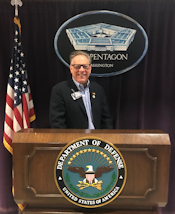
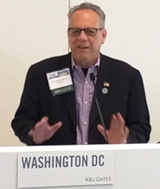
NanoBusiness News – Winter Edition 2012

Posted on January 30th, 2012 in Uncategorized | No Comments »

I want to share with the members of the Nanotechnology Community an amazing story of one young woman’s scientific journey.

Calif. HS student devises possible cancer cure
http://www.cbsnews.com/8301-18563_162-57358994/calif-hs-student-devises-possible-cancer-cure/?tag=pop;stories

And in other NANO NEWS . . .

Global Nanotechnology Market to Reach US$30.4 Billion by 2015, According to New Report by Global Industry Analysts, Inc.
http://www.prweb.com/releases/nanotechnology_nanotubes/nanomaterials_nanofilms/prweb9120599.htm

2012 Predictions For TSCA Reform And EPA Initiatives
http://www.lawbc.com/uploads/docs/00088951.pdf

Research 2.0
Equity Research Coverage
Harris & Harris Group: Compelling Value in Nanotech
http://blog.research2zero.com/wp-content/uploads/2012/01/HH-Update-Jan-9-2012.pdf

Nanotech a ‘cross-cutting technology,’ state official says
http://m.heraldsun.com/heraldsun/db_39935/contentdetail.htm?contentguid=gvLy0b7B&detailindex=1&pn=0&ps=5&full=true#display

America’s Dirty War Against Manufacturing (Part 2): Carl Pope
http://www.bloomberg.com/news/2012-01-19/america-s-dirty-war-against-manufacturing-part-2-carl-pope.html

PLEASE SAVE THE DATE
Nanotech Commercialization Conference
April 4-5, 2012
American Tobacco Campus
Research Triangle, Durham, NC
www.nanoevent.org

If you want to live a happy life, tie it to a goal, not to people or things.
– Albert Einstein

Regards,

Vincent Caprio “Serving the Nanotechnology Community for Over a Decade”
Executive Director
NanoBusiness Commercialization Association
203-733-1949
vincent@nanobca.org
www.nanobca.org

Nanotech Commercialization Conference April 4-5th Research Triangle, NC

Posted on January 23rd, 2012 in Uncategorized | No Comments »

The NanoBusiness Commercialization Association www.nanobca.org has joined with the N.C. Department of Commerce http://www.nccommerce.com/ and the Center of Innovation for Nanobiotechnology (COIN) http://www.nanobiotech.org/ to co-host the Nanotech Commercialization Conference http://www.nccommerce.com/scitech/ncc. The event will bring together every facet of our Nanotech Community: a coalition of nanotechnology stakeholders including nanotechnology companies (public and private), nanotechnology innovators, cutting edge start-ups, leading scientists, investors and executives from Fortune 100 companies. The event will be held on April 4-5, 2012 at the American Tobacco Campus http://www.americantobaccohistoricdistrict.com/rent-bay-7.html in Research Triangle, NC.

We are very pleased to be teaming with COIN on this groundbreaking event. Last fall I had the opportunity to spend a week in North Carolina and was very surprised at the activity in the nanotechnology community, particularly in the biotechnology sector. At present time, there are over 40 NanoBio companies located in North Carolina with leading research being undertaken at Duke, UNC, NC State, Wake Forest and the region’s other universities.

“For several years, North Carolina has been recognized as a top state for nanotechnology research and practical application,” said John Hardin http://www.nccommerce.com/scitech/board-of-science-technology/executive-staff/dr.-john-hardin , Executive Director of the Office of Science & Technology in the North Carolina Department of Commerce. “This conference, which focuses on moving nanoscience from the lab to the global market, will both highlight North Carolina’s pioneering role and help participants turn emerging nanotechnologies into skilled, high-wage jobs.”

“Having the founding business organization of the nanotechnology sector, the NanoBusiness Commercialization Association, choose to partner with COIN and N.C. Department of Commerce on this event is most gratifying and demonstrates North Carolina’s leadership in the nanotechnology field,” said Griffith A. Kundahl http://www.nanobiotech.org/about-us/meet-our-team, Executive Director of COIN.

About N.C. Department of Commerce
N.C. Commerce is the state’s lead economic development agency, developing and implementing strategies around job creation and investment, community and workforce development, and innovation. For more information, see: http://www.nccommerce.com/

About COIN
Established in 2009, COIN is a nonprofit, virtual center of innovation for nanobiotechnology and nanomedicine based in North Carolina. COIN supports those organizations that are most-impacted by the convergence of nano (advanced materials) and bio (life sciences) by ensuring that they have immediate structured access to all relevant resources and a conduit to key regulatory agencies impacting the field. COIN is a premier source of networking opportunities, information, and tailored innovation services that address client needs and catalyze and advance commercialization of nanobiotechnology. Through a network of academic and emerging company researchers, COIN provides access to a myriad of nano-biotechnologies that may be applied across a range of life science sectors. COIN provides a single point of entry to the nanobiotechnology community, connecting key players at the intersection of advanced materials and life sciences.

Save the date April 4-5, 2012! We look forward to seeing you in the spring in North Carolina.

Regards,

Vincent Caprio “Serving the Nanotechnology Community for Over a Decade”
Executive Director
NanoBusiness Commercialization Association
203-733-1949
vincent@nanobca.org
www.nanobca.org
www.vincentcaprio.org
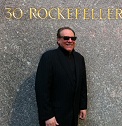
NanoBusiness Selects Most Influential Nanotechnology Leaders of 2011

Posted on January 5th, 2012 in Uncategorized | No Comments »

I love lists, data, statistics and all types of information. Every year, for over 40 years, my mother has purchased the Farmer’s Almanac for me.

America has many World Records. Here are a couple of questions for our Nanotechnology Community.
1) What D.C. Monument is the World’s tallest Obelisk?
2) Batavia, Illinois is the home to the World’s largest atom smasher. What is the name of the facility?

Today, we announce our Most Influential Nanotechnology Leaders List from 2011. I have enjoyed communicating with all these leaders in the Nanotechnology Community. The common thread amongst them is that they are all Nanotechnology Evangelists. Kudos to these leaders for their contributions to our Nanotechnology Community.

Dr. Ajay Malshe, Founder, Executive Vice President and Chief Technology Officer, NanoMech Inc.
http://www.nanomech.biz/company-profile/leadership/

Alain E. Kaloyeros, PhD, Senior Vice President and Chief Executive Officer, CNSE; Vice President and Special Advisor to the President, University-wide Economic Innovation and Outreach; Professor of Nanoscience
http://cnse.albany.edu/AboutUs/FacultyStaff/ExecutiveStaff/AlainEKaloyeros.aspx

Anil R. Diwan, PhD, Chairman and President, NanoViricides, Inc.
http://www.nanoviricides.com/board.html

Dr. Anita Goel, MD, PhD, Chairman & Scientific Director, Nanobiosym and Chairman & CEO, Nanobiosym Diagnostics
http://www.nanobiosym.com/our-team/chairman-and-ceo.html

David J. Arthur, Chief Executive Officer, SouthWest NanoTechnologies (SWeNT)
http://swentnano.com/about/management.php

Douglas W. Jamison, Chairman of the Board, Chief Executive Officer & Managing Director, Harris & Harris Group
http://www.tinytechvc.com/team.cfm

Fern P. O’Brian, Partner, Thompson Hine
http://www.thompsonhine.com/lawyer/FernOBrian/

Griffith A. Kundahl, Executive Director, Center of Innovation for Nanobiotechnology
http://www.nanobiotech.org/about-us/meet-our-team

Harry Bushong, President and Co-founder, nanoTox, Inc.
http://www.nanotox.com/management/management-team.html

James M. Hussey, Chief Executive Officer, member of the Board of Directors, NanoInk, Inc.
http://www.nanoink.net/management-team.html

Jeffrey Morse, Managing Director, National Nanomanufacturing Network, NSF Center for Hierarchical Manufacturing, University of Massachusetts, Amherst
http://www.internano.org/index.php?option=com_internanodirectory&task=view&id=4&Itemid=179

Jess A. Jankowski, President and Chief Executive Officer, Nanophase
http://www.nanophase.com/about/executives.aspx

Jim Phillips, Chairman and CEO, NanoMech Inc.
http://www.nanomech.biz/company-profile/leadership/

Josh Wolfe, Co-Founder & Managing Partner, Lux Capital
http://www.luxcapital.com/team/profile/josh-wolfe

The Honorable Kelly H. Carnes, President and Chief Executive Officer, TechVision21
http://www.techvision21.com/techvision/team/kellycarnes.html

Lloyd Whitman, PhD, Deputy Director, Center for Nanoscale Science & Technology (NIST)
http://www.nist.gov/cnst/whitman.cfm

Lynn L. Bergeson, Bergeson & Campbell, P.C.
http://www.lawbc.com/about/professional-resumes/attorneys-shareholders/

Dr. Mihail C. Roco, Senior Advisor for Nanotechnology, National Science Foundation
http://www.nsf.gov/eng/staff/mroco.jsp

Mostafa Analoui, PhD, Head of Healthcare and Life Sciences, The Livingston Group and Chairman and CEO of Cense Biosciences, Inc.
http://www.livingstonsecurities.com/about.php

Peter Hébert, Co-Founder & Managing Partner, Lux Capital
http://www.luxcapital.com/team/profile/peter-hebert

Dr. Sally Tinkle, Deputy Director, National Nanotechnology Coordination Office of the National Science and Technology Council
http://www.internano.org/nms2011/tinkle

Scott Livingston, Chairman and Chief Executive Officer, Livingston Securities LLC.
http://www.livingstonsecurities.com/about.php

Scott E. Rickert, PhD, President, Co-Founder and Chief Executive Officer, Nanofilm
http://www.nanofilmtechnology.com/about_nanofilm/bio-scott.htm

Travis Earles, Advanced Materials and Nanotechnology Initiatives, Lockheed Martin Corporation

William Moffitt, President and Chief Executive Officer, Nanosphere
http://www.nanosphere.us/page/management-team

The answer to question one is The Washington Monument. The answer to question two is Fermi National Accelerator Laboratory, named for Enrico Fermi.

Happy New Year and here is to a prosperous 2012.

Regards,

Vincent Caprio “Serving the Nanotechnology Community for Over a Decade”
Executive Director
NanoBusiness Commercialization Association
203-733-1949
vincent@nanobca.org
www.nanobca.org
www.vincentcaprio.org
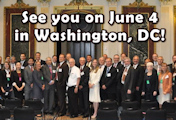
NanoBusiness 2011 Year End News – Top Trends & SBIR Reauthorization

Posted on January 3rd, 2012 in Uncategorized | No Comments »

I would like to share with you two Nanocentric articles that are relevant to our Community.

Our first article is written by our good friend Scott Rickert, CEO of Nanofilm http://www.nanofilmtechnology.com/index.aspx?bhcp=1 and NanoBusiness Board member. Mr. Rickert’s insight as a Nanotechnology entrepreneur is an interesting read.

NANOTECHNOLOGY: SIX TO WATCH IN ’12
A look back at 2011 nano-topics, pointing the way in 2012.
By Scott E. Rickert
Dec. 21, 2011
http://www.industryweek.com/articles/nanotechnology_six_to_watch_in_12_26211.aspx?SectionID=4

It’s been a year, hasn’t it? Not always as good as we’d hoped, but never as dark as we feared. My take? We’ve learned. And with that knowledge, we’re moving on. That’s why this month I’m making some prognostications about 2012 by revisiting our hottest topics in 2011.

The #1, #2 and #3 Nano-Topics to Watch in 2012 are the same as for 2011: globalization, commercialization and partnership – as I reported from Zurich, Cyprus and Boston gatherings. It’s clear that we can’t talk about one without the others – the SWOT analysis brings them all to the table. Is it a threat to America’s technology leadership? An opportunity for our innovators? A call for more government funding? A plea for less interference? All that and more.

So my advice for 2012? Get on with it. The world is going to keep getting flatter. That’s why I’ve been to talk business in India, the Middle East and Europe during the fourth quarter. Others are doing the same. This month India announced a NanoPark near the Mumbai airport to serve the 50+ nanocompanies there looking for worldwide commercialization partners. China held a conference in October for 500 R&D, industry, government and investment leaders to explore public-private commercialization partnerships – including a couple of America’s best-known consumer and nanotech names – plus companies from Japan, Iran, Israel, Germany and Korea.

And what about funding for commercialization in the U.S.? The 2012 Obama administration budget, with its $2.1 billion for nanotechnology, still languishes in Congress, and the 2013 version is likely to face the same fate. It’s an important facet to the jobs creation plans in the government’s Advanced Manufacturing Partnership program, so it may get at least some of the attention it deserves.

But here’s the really interesting development that happened in November. The National Nanotechnology Initiative made a formal response to questions about commercialization progress from the President’s Council of Advisors on Science and Technology (PCAST). Some pundits suggest PCAST was challenging the value of the billions of tax dollars already invested. The good news? There was plenty to say. Speakers reeled off activities for some 7,800 projects, touching all 50 states and involving 15 agencies, from the Department of Defense to the National Institutes of Health.

There’s cause for concern, of course. A university nanotechnology institute warns that other countries are building (and spending!) to rival our government program. Lux Research cautions that Europe may surpass the U.S. in nanotechnology-enabled products by 2015 unless we take an aggressive commercialization stance.

Still, there’s plenty of encouraging commercialization news. Nanomedicine and environmentally friendlier nano-enabled batteries, both topics we explored here in 2011, continue to have breakthroughs.

Hot topic #4 in our nano review was how nanotechnology is making hydraulic fracturing, or “fracking,” for oil and natural gas faster, easier – and more environmentally friendly. Despite recent concerns about a Wyoming location, statistics count seven billion barrels of oil and 600 trillion cubic feet of natural gas in safe results. And, I’d bet my bottom dollar that future eco-improvements will be nano-enabled ones.

That’s the perfect segue to Topic #5: environmental health and safety concerns. Work by the EPA, FDA and other regulators continues apace, as do the efforts of private industry. While I saw a flurry of panic early in the year, the mood now is calm, focused and reasonable.

We need to keep it that way – because of Topic #6: nano-terrorism. Remember September’s column about the package bomb mailed to nanotech faculty at a Mexico university? I had expected to call an “all-clear” – until December 7. That’s the day another professor in Mexico suffered minor burns from a letter bomb. No one has yet claimed responsibility and authorities aren’t ready to speculate – or even name the addressee. And, while the college is installing metal detectors, no one is slowing down their research.

So let’s close out 2011 on a positive note, too, by a stop by the geek-chic nanotechnology t-shirts we donned in July’s column. Favorite then: “Nanotechnology. Don’t sweat the big stuff.” New favorite: “Grey Goo. There’s greater risk from the back of your fridge.” The perfect sentiment for a Happy Nano New Year greeting.

Scott E. Rickert is chief executive of Nanofilm, Ltd.
——————————————————————-

Our second article is a technical analysis of SBIR reauthorization brought to us by By David T. Ralston, Jr., Partner, Foley & Lardner LLP

CONGRESS FINALLY REAUTHORIZES SBIR/STTR PROGRAMS AND DECIDES TO PERMIT OWNERSHIP OF SBIR APPLICANTS BY VENTURE CAPITAL ENTITIES

After more than five years of debate and legislative battles, Congress recently re-authorized the Small Business Innovation Research Program (SBIR) and Small Business Technology Transfer Program (STTR) for six years, ending September 30, 2017, as part of the National Defense Authorization Act of 2012, H.R. 1540. In addition to the reauthorization, H.R. 1540 permits federal agencies to allocate a portion of their SBIR funding for small business concerns (SBCs) owned by multiple venture capital firms, private equity firms, and hedge funds (collectively herein VC entities), and requires that the U.S. Small Business Administration (SBA) issue new regulations governing SBIR program participation by such SBC applicants. The outcome will be dramatic changes in the SBA’s rules concerning affiliation and citizenship of SBCs with VC entity investment.

Provided in this article is a quick assessment of the provisions permitting VC entity investment in SBIR participants. These changes will be a major discussion topic in 2012 as H.R. 1540 mandates that the SBA issue proposed regulations implementing the new approach to VC entity investment by mid-April 2012 (within 120 days of H.R. 1540’s enactment), and adopt final rules by December 2012.

As to agency SBIR funding, H.R. 1540 provides that the National Institutes of Health (NIH), the Department of Energy (DOE) and the National Science Foundation (NSF) may award up to 25% of their annual SBIR funding to SBIR applicants that are SBCs majority-owned by multiple VC entities. All other federal agencies may award up to 15% of their annual SBIR funding to such applicants. The impact of this provision is to cap agency SBIR funding for SBC applicants majority-owned by multiple VC entities, and thereby preserve the lion’s share of SBIR funding for all other applicants.

To implement the 25/15% funding authority, NIH, DOE, NSF or another agency desiring to make such grants must first file a determination with Congress that SBIR awards to such SBC applicants are necessary to induce needed investment by VC entities in small business research and are consistent with the agency’s SBIR program. Furthermore, SBC applicants that are majority-owned by multiple VC entities must register with the SBA, thereby providing public notice of their application status.

Turning to SBIR applications by SBCs owned by VC entities, the statute, after setting out supportive Congressional intent, directs the SBA to issue new regulations permitting SBIR participation by SBCs majority-owned by multiple VC entities (unless such an SBIR applicant is: (1) a large business, (2) owned or controlled by a large business, or (3) is, or is majority owned by, a foreign entity or non-U.S. citizen). To accomplish that goal, H.R. 1540 effectively mandates that the SBA’s new regulations revise (1) the applicable SBIR size standards, (2) the related “affiliation” rules governing SBC SBIR applicants and VC entities, and (3) the rules governing U.S. citizenship of SBC SBIR applicants.

Current SBA rules effectively limit VC entity investment in SBIR applicants to a minority position, using a combination of the SBA’s size standard and the SBA’s “affiliation” rules, plus a restrictive U.S. citizenship requirement. In short, if a VC entity or group of VC entities with common shareholders holds a controlling interest in an SBIR applicant, the SBA deems the VC entity (or the VC entity group) and the entire portfolio of investments held by the VC entity or group to be “affiliated” with the SBIR applicant. As the SBA size limit for SBIR participants is 500 employees, the typical impact of VC entity affiliation with the SBIR applicant is to render the SBIR applicant ineligible for SBIR grants because the total employee count of (1) the SBIR participant’s employees, plus (2) VC entity’s portfolio employees, will exceed the 500 employee limit. The SBA’s current U.S. citizenship requirement applicable to SBIR applicants also prevents control by VC entities, because it requires that 51% of the ownership and control of the SBC SBIR applicant be held by U.S. citizens who are natural persons, not corporate entities such as VC entities. The impact of those rules has been to preclude SBCs controlled by VC entities from the SBIR program.

H.R. 1540 will now permit SBIR applications by SBCs majority-owned by multiple VC entities, a result principally accomplished through changes to the affiliation rules governing VC portfolio investments. The statute provides that, even when a VC entity itself is determined to be affiliated with an SBC SBIR applicant, a portfolio investment of that VC entity shall not be determined to be affiliated with the SBIR applicant when (1) the VC is not a majority owner of the SBIR applicant, and (2) the VC is not a majority owner of the portfolio investment and does not control a majority of the board of directors of the portfolio investment.

This appears to be a “safe-harbor” provision, meaning that (a) a non-affiliation determination is mandatory when those two criteria are met, and (b) a non-affiliation determination could still be found even if the two criteria are not met. Notably, the statute retains the SBA’s general authority to find that VCs and their portfolio investments are affiliated with an SBC SBIR applicant, but subject to (1) the foregoing provision, and (2) that affiliation cannot be based on shared portfolio investment investors.

As to the U.S. citizenship requirement, H.R. 1540 mandates that the SBA provide new rules on determining citizenship, and consider whether the SBIR applicant is (1) 51% owned and controlled by natural U.S. citizens or domestic VC entities, (2) domiciled in the U.S., and/or (3) a direct or indirect subsidiary of a foreign firm. A finding that the SBIR applicant is a direct or indirect subsidiary of a foreign firm will occur when (1) a foreign VC entity owns more than 20% of the SBC SBIR applicant, or (2) in the aggregate, foreign entities own more than 49% of the applicant.

Questions on H.R. 1540 may be directed to David Ralston dralston@foley.com in the Washington office of Foley & Lardner LLP.

2012 is shaping up to be a great year for our Nanotechnology Community. I would like to wish you and your family a Happy New Year.

Regards,

Vincent Caprio “Serving the Nanotechnology Community for Over a Decade”
Executive Director
NanoBusiness Commercialization Association
203-733-1949
vincent@nanobca.org
www.nanobca.org
www.vincentcaprio.org

NanoBusiness News – Fall Edition 2011

Posted on December 27th, 2011 in Uncategorized | No Comments »

The NanoBusiness Commercialization Association had a very busy fall producing two Conferences . . .

10th Annual NanoBusiness/Nanomanufacturing Summit 2011
http://www.internano.org/nms2011/
September 25-27, 2011 – Boston, MA
Here is the link to the presentations
http://www.ctnanobusiness.org/NanoBCA/2011-nanomanufacturing-summit-presentations/

4th Annual Nano Energy Summit
http://www.nanoenergysummit.org/
October 25-26, 2011 – Golden, CO
Here is the link to the presentations
http://nanoenergysummit.org/presentations.php

. . . and Sponsoring two Conferences

Nanoinformatics 2011 (I had the opportunity to deliver a Keynote Speech)
http://nanotechinformatics.org/
December 7-9, 2011 – Arlington, VA

7th Annual Livingston Nanotechnology Conference
December 7, 2011 – NYC
http://www.livingstonsecurities.com/livingston_conference2011/schedule.php

During these difficult financial times we remain committed to NNI spending and U.S. R&D spending. These were my comments from my speech at Nanoinformtics 2011 if you would like to listen:
http://nyc03.egihosting.com:8002/wccc/caprio_17.mp3

2012 SPRING CONFERENCE

We will be hosting the Nanotech Commercialization Conference http://www.ncscitech.com/ncc with the Center of Innovation for Nanobiotechnology (COIN) http://www.nanobiotech.org/ on April 4-5, 2012. The Conference is being held at the American Tobacco Campus in Research Triangle, Durham, NC. At present time there are over 40 NanoBio companies in North Carolina. Details on this upcoming event will follow after the New Year.

NANO NEWS
Commerce Secretary John Bryson Lays Out Vision for Department of Commerce
December 15, 2011
Commerce Secretary includes the utilization of Nanotechnology in supporting manufacturing
http://www.commerce.gov/news/press-releases/2011/12/16/commerce-secretary-john-bryson-lays-out-vision-department-commerce

Nanotechnology May Lead To The End Of Laundry
http://www.forbes.com/sites/alexknapp/2011/12/15/nanotechnology-may-lead-to-the-end-of-laundry/

Nanotechnology firm Liquidia partners with PATH on new pneumonia vaccine
http://www.medcitynews.com/2011/12/nanotechnology-firm-liquidia-partners-with-path-on-new-pneumonia-vaccine/?edition=north-carolina

Harris & Harris Group Notes Recent Portfolio Company Accomplishments
http://www.tinytechvc.com/releasedetail.cfm?ReleaseID=633448

A Little Nanotechnology Discipline, Please!
by IEEE
http://spectrum.ieee.org/nanoclast/semiconductors/nanotechnology/a-little-nanotechnology-discipline-please

UCLA physicists report nanotechnology feat with proteins
http://www.nanotech-now.com/news.cgi?story_id=44109

As we come to the end of the year I am reminded of one of my favorite quotes by Dale Carnegie,
“Most of the important things in the world have been accomplished by people who have kept on trying when there seemed to be no hope at all.” I would like to wish you and your family a happy holiday season.

Regards,

Vincent Caprio “Serving the Nanotechnology Community for Over a Decade”
Executive Director
NanoBusiness Commercialization Association
203-733-1949
vincent@nanobca.org
www.nanobca.org
www.vincentcaprio.org

2 Nano Conferences This Week – Livingston Nano 12/7 NYC/Nanoinformatics 12/7-9 Arlington VA

Posted on December 7th, 2011 in Uncategorized | No Comments »

A very busy week for many of us in the Nanotechnology Community. Two super nano conferences this week.

7th ANNUAL LIVINGSTON NANOTECHNOLOGY CONFERENCE
Wednesday, December 7th at the law offices of Chadbourne & Parke
30 Rockefeller Center – Midtown Manhattan
www.livingstonsecurities.com

I am honored to speak at Scott’s event http://www.livingstonsecurities.com/livingston_conference2011/schedule.php.

Excellent agenda with Keynote Speakers such as:
– Scott Livingston, Chief Executive Officer, Livingston Securities
– Andreas Schierenbeck, President, Siemens Industries
– Mostafa Analoui, Head of Healthcare, Livingston Securities
– Jeffrey Kraws, Chief Executive Officer, Crystal Research Associates

REGISTER TODAY
To register for the conference, please email Jonathan Mason at jonathan@livingstonsecurities.com

———————————————————
NANOINFORMATICS 2011 CONFERENCE
December 7-9th at the Hyatt Regency Crystal City hotel in Arlington, VA
http://nanotechinformatics.org/

Very comprehensive agenda http://nanotechinformatics.org/program with the following Keynote Speakers:
– Christian Lehinger, HealthQuest Alliance
– Altaf Carim, White House Office of Science and Technology Policy
– Gerhard Klimeck, Purdue University, nanoHUB
– Sally Tinkle, National Nanotechnology Coordination Office
– Deborah Gracio, Pacific Northwest National Laboratory

CONFERENCE REGISTRATION
The University of Massachusetts Amherst Conference Services is handling registration. Please use this link to register:
https://regstg.com/Registration/Introduction.aspx?rid=022239e6-8b7b-4a46-94d1-e42ab98caa26

———————————————————-
NANO NEWS
Fundamentals of Nanoelectronics – Purdue University
Online course broadly accessible to students in any branch of science or engineering
https://nanohub.org/groups/purdue/flyer

Global Nanotechnology Industry Output Expected to Reach $2.4 Trillion by 2015
http://www.marketwatch.com/story/global-nanotechnology-industry-output-expected-to-reach-24-trillion-by-2015-2011-11-17?reflink=MW_news_stmp

NeoPhotonics Doubles Capacity of Narrow Linewidth Tunable Lasers for Coherent DWDM Systems http://www.tinytechvc.com/releasedetail.cfm?ReleaseID=626594

Nanosys Promises Better Color in TVs, Digital Devices
http://www.tinytechvc.com/releasedetail.cfm?ReleaseID=626635

Research 2.0 Equity Research Coverage
Harris & Harris Group: Nanotech Phase Change Ahead
http://www.research2zero.com/openresearch/TINYNOV2011.pdf

I hope to see you in either NYC or Arlington, VA. Happy holidays to you and your family.

Regards,

Vincent Caprio “Serving the Nanotechnology Community for Over a Decade”
Executive Director
NanoBusiness Commercialization Association
203-733-1949
vincent@nanobca.org
www.nanobca.org
www.vincentcaprio.org

NanoBusiness Endorses 7th Annual Livingston Nanotechnology Conference, Dec. 7th NYC

Posted on December 5th, 2011 in Uncategorized | No Comments »

I will be speaking at the 7th Annual Livingston Nanotechnology Conference http://www.livingstonsecurities.com/livingston_conference2011/schedule.php on Wednesday, December 7th from 4:45-5:30 on the Water Innovations panel.

Scott Livingston is holding his 7th Annual year end investor conference, scheduled for December 7th, at the offices of Chadbourne & Parke, located at 30 Rockefeller Center in Midtown Manhattan. Scott and his team would like to have you join them.

AGENDA
http://www.livingstonsecurities.com/livingston_conference2011/schedule.php.

REGISTER TODAY
To register for the conference, please email Jonathan Mason at jonathan@livingstonsecurities.com

The Livingston Securities Nanotechnology Investor and Stakeholder Summit is Wall Street’s largest gathering for corporate executives, private company CEOs, institutional investors, political and policy leaders, and high profile academic leaders to gather and connect with each other to learn about the latest trends in innovation and corporate development and connect with others that can help them further their interests.

Each year Livingston Securities has the stakeholders in our target industries (energy, cleantech, consumer electronics, green buildings, water, advanced materials, healthcare) attend and present their companies, funds, etc to the attendees and investor base. Livingston Securities’ audience is keenly interested in commercializing advanced technologies. The theme is that the revolution in materials science, that is enabled by discovery at the nanoscale, is having a substantial impact on almost every industry, region, company and investment portfolio in our economy, and enabling entirely new industries, companies and solutions to the great challenges that face us as a society.

The 7th Annual Livingston Nanotechnology Conference has a robust agenda and a fabulous line-up of speakers:

WEDNESDAY, DECEMBER 7, 2011
8:30-9:00am Registration

9:00-9:15am Welcoming Remarks
Scott Livingston, Chief Executive Officer, Livingston Securities

9:15-10:00am Panel 1 – Solar 2.0
– Moderator: Jack Hidary, Chairman, Global Solar Center and NREL Board Member
– Frank Yang, Senior Director, Business Development, Stion Corp.
– Chris Norris, President & CEO, Alta Devices

10:00-10:45am Panel 2 – Nanotechnology & the Built Environment
– David Paratore, Chief Executive Officer, Nanosteel Corp.
– Jim Fugitte, Chief Executive Officer, Wind Energy Corp.
– Glen Finkel, Chief Executive Officer, Pureti Corp.

10:45-11:15am Interview
– Karen Lightman, Managing Director, MEMS Industry Group

11:15-12:00pm Panel 3 – Companies to Watch – 2012 IPO Candidates
– Earl Charles, Chief Financial Officer, Aoptix Corp.
– Peter Antoinette, Chief Executive Officer, NanoComp
– Paul Woods, Chief Executive Officer, Algenol Biofuels
– Allen Ruszkowski, Chief Executive Officer, CVAC Systems

12:00-12:45pm Panel 4 – Nanotechnology & Economic Development – Focus on Key States
– Griff Kundahl, Executive Director, North Carolina Center of Innovation for NanoBiotechnology (COIN)
– Anthony Green, Vice President for Commericalization, Ben Franklin Technology Center
– J. Michael Bowman, Executive Director, Delaware Technology Park
– Joseph Garone, Chairman, Long Island Forum for Technology

12:45-1:00pm Lunch Keynote
– Scott Livingston, Chief Executive Officer, Livingston Securities

1:00-1:45pm Panel 5 – Nanotechnology & Venture Capital – Focus on Investments
– Joel Serface, Managing Director, Clean Range Ventures
– Michael Gurau, Managing Director, CEI Community Ventures
– Patti Glaza, Managing Director, Arsenal Venture Partners
– William Reinisch, Managing Director, Paladin Capital

1:45-2:15pm Keynote – Innovation in the Built Environment
– Andreas Schierenbeck, President, Siemens Industries

2:15-3:00pm Panel 6 – Scaling Up & Selling Revolutionary New Materials
– Robert Miller, Chief Executive Officer, Abakan Inc.
– Gavin Rezos, Chairman, Alexium Corp.
– David Arthur, Chief Executive Officer, Southwest Nanotechnologies Inc.
– Karl Heinz Strobl, Vice President, Business Development, CVD Equipment Corp.

3:00-3:45pm Panel 7 – Nano Enabled Revolutionary Energy Technologies
– Rahul Iyer, Senior Director, Corporate Development, Siluria Technologies
– PJ Piper, Chief Executive Officer, QM Power Corp.
– David Shrier , Entrepreneur in Residence, Ernst & Young
– Jon Myers , CEO, Graphene Technologies Inc.

3:45-4:00pm Keynote Interview – Healthcare 2.0
– Mostafa Analoui , Head of Healthcare, Livingston Securities
– Jeffrey Kraws, Chief Executive Officer, Crystal Research Associates

4:00-4:45pm Panel 8 – Innovation Strategies in America’s Blue Chip Companies
– Bob Prieto, Senior Vice President, Fluor Corp.
– Pulakesh Mukherjee, Principal, BASF Venture Capital
– Brad Pietras, Director, Lockheed Martin Corp Corporate Engineering & Nanotechnology
– David Diehl, Director of Corporate Technology Initiatives, PPG Corp
– Peter Bastien, Technology Business Development, Toyota Tsusho America

4:45-5:30pm Panel 9 – Water Innovations
– Hu Fleming, Global Director, Hatch Water
– Richard Stuebi, Managing Director, Early Stage Partners
– Kevin McGovern, Chairman, The Water Initiative
– Vincent Caprio , Executive Director, Water Innovations Alliance

5:30-6:00pm Cocktails and Networking

BREAKOUT SESSIONS
11:00-11:30am Rethinking Manufacturing; Nanomaterials Based Nanomanufacturing of Energy, Medical and Electronic Devices
– Ahmed Busnaina, Director, The NSF Nanoscale Science and Engineering Center for High-rate Nanomanufacturing – Northeastern University

11:30-12:00pm Set America Free
– Frank Gaffney, President, Center for Security Policy and Founding Member, Set America Free Coalition

12:00-12:30pm The Space Elevator
– Michael Laine, The Liftport Group

12:30-1:00pm Innovation Agenda in Washington, DC
– Morris Reid, Managing Director, BGR Group

I believe this event is distinctive for Nanotechnology conferences in that it provides the Wall Street perspective for the Nanotechnology Community. Scott and his team have produced results in raising money for nanotechnology companies during the last seven years. The Livingston Securities Nanotechnology Conference is where the networking begins! I look forward to seeing you on Wednesday, December 7th in NYC.

Regards,

Vincent Caprio “Serving the Nanotechnology Community for Over a Decade”
Executive Director
NanoBusiness Commercialization Association
203-733-1949
vincent@nanobca.org
www.nanobca.org
www.vincentcaprio.org

NanoBusiness Recommends Nanoinformatics 2011, Dec. 7-9th, Arlington, VA

Posted on November 21st, 2011 in Uncategorized | No Comments »

I will be speaking at the Nanoinformatics 2011 Conference http://nanotechinformatics.org/ being held December 7-9th in Arlington, VA at the Hyatt Regency Crystal City hotel.

Nanoinformatics 2011 will bring together informatics experts, nanotechnology researchers, and other stakeholders and potential contributors to advance Nanoinformatics 2020 Roadmap goals. The workshop will set a clear path for Nanoinformatics participants through the presentation of projects and research, open discussions, and strategic planning sessions.

The conference will feature nanoinformatics presentations on a variety of topics as well as focused talks on Quantitative Structure Activity Relationships and Minimum Required Characteristics. December 9th will be a working day where feedback and ideas on the Nanoinformatics 2020 Roadmap from meeting attendees will be especially welcome.

CONFERENCE REGISTRATION
The University of Massachusetts Amherst Conference Services is handling registration. Please use this link to register:
https://regstg.com/Registration/Introduction.aspx?rid=022239e6-8b7b-4a46-94d1-e42ab98caa26

HOTEL REGISTRATION
Hyatt Regency Crystal City
2799 Jefferson Davis Highway
Arlington, VA 22202
(703) 418-1234
https://resweb.passkey.com/Resweb.do?mode=welcome_gi_new&groupID=5280275

NANO NEWS
NDMX golf ball technology is now the property of OnCore Golf
http://www.kickstarter.com/projects/995253465/hollow-metal-core-golf-balls?ref=recently_launched

Research 2.0 Equity Research Coverage
Harris & Harris Group: Nanotech Phase Change Ahead
http://www.research2zero.com/openresearch/TINYNOV2011.pdf

Bergeson & Campbell, P.C.
Congressional Nanotechnology Caucus Hosts Briefing on “Nanotech and Jobs”
http://www.lawbc.com/tsca/memoranda-2011-59-mobile.html

United Airlines to operate first US commercial flight on (Solazyme) aviation biofuels
http://biofuelsdigest.com/bdigest/2011/11/05/united-airlines-to-operate-first-us-commercial-flight-on-solazyme-aviation-biofuels/

Global Nanotechnology Industry Output Expected to Reach $2.4 Trillion by 2015
http://www.marketwatch.com/story/global-nanotechnology-industry-output-expected-to-reach-24-trillion-by-2015-2011-11-17?reflink=MW_news_stmp

I hope you and your family have a happy Thanksgiving.

Regards,

Vincent Caprio “Serving the Nanotechnology Community for Over a Decade”
Executive Director
NanoBusiness Commercialization Association
203-733-1949
vincent@nanobca.org
www.nanobca.org

Review of 10th Annual NanoBusiness Conference Day 2 – September 27th

Posted on November 21st, 2011 in Uncategorized | No Comments »

Here is the continuation of our 10th Annual NanoBusiness/Nanomanufacturing Summit 2011 review from Tuesday, September 27th at the Seaport World Trade Center in Boston.

Doug Jamison returned Tuesday morning to show us Solazyme’s roadshow video as an example of how nanotech companies are pitching themselves to investors. This led nicely into the day’s Keynote sessions featuring NNI veteran Mihail C. (Mike) Roco along with four more of our CEOs – Scott Rickert of NanoFilm, Jim Hussey of NanoInk, David Arthur of SouthWest NanoTechnologies, and Jim Phillips of NanoMech. Together with the day’s breakout session speakers, they painted a great picture of the breadth of successful business models and plans nanotech companies are executing.

Scott Rickert http://www.ctnanobusiness.org/NanoBCA/wp-content/uploads/2011/10/Rickert-0927a.pdf started things off with a talk featuring five signposts on the road to nanotech’s success in its second decade. Scott’s business model at NanoFilm is focused on delivering commercial with today’s nanotechnology while progressing towards future nanotech that accomplishes what is now impossible.

1.It’s not just for rocket scientists anymore. Practical applications of nanotechnology abound, from environmental remediation to sunscreens and other personal care products. Scott regularly writes about today’s nanotech for IndustryWeek http://www.industryweek.com/Author.aspx?AuthorID=84, and under his guidance NanoFilm has been making products and profits with nanotechnology for over two decades.

2. Nanotechnology rearranges the map. While the forces of globalization have hurt many sectors of the U.S. economy, we are the center of the nanotech world. NanoFilm exports products, not jobs, to every continent while working with many international partners. Just as they have built a strong presence in Cleveland, other companies are enriching Des Moines, Tucson, Tulsa, Orlando, etc. – there is a nano presence in every region of the country.

3. Government agencies are putting more of their dollars into business partnerships and less into handouts. While stimulus packages kept some companies going, they are not the foundation of a sustainable business model. The government can be an important customer but make sure you understand what fraction of your business that represents and why. Government-sponsored research has long served to seed new companies, but when you are as old as NanoFilm (26) you need to be beyond that. Scott supports broad policies that encourage innovation and help many small and medium sized enterprises rather than targeted programs that support a few.

4. Nanotechnology is making the U.S. a manufacturing powerhouse again, not by filling 20,000 person automobile factories but through 100s of small and medium factories demanding skilled workers. The critical value of intellectual property in nano is a strong incentive for keeping production local – in your own country, and preferably in your own zip code. NanoFilm utilizes 80,000 sq. ft. of factory space in Cleveland and oversees the production of every product.

5. Nanotech bullies and crybabies are starting to have grown-up conversations. The discussions about environmental, health, and safety issues have taken on a new and more sophisticated tone. Regulatory agencies recognize that successful employers care about their workers, and are partnering with companies to develop and certify good EHS practices and procedures. In NanoFilm’s case, that means spending a lot of time talking to EPA and NIOSH.

Scott’s vision for NanoFilm is based on a horizontal business platform similar to 3M or IFF. As a vertical producer he would have to compete with the GEs, DuPonts, and PPGs of the world. Instead, he concentrates on developing three classes of nanofilms – self-assembled, nanocomposite, and surface renewable – that are coated on to customer substrates. Every product is developed in response to a customer need, through a collaborative partnership. They compete based on performance, not price. NanoFilm’s customers are also sales partners – Scott only employs 5 salespeople, but there are over 30,000 technical and sales professionals selling NanoFilm coatings as part of products each and every one of us uses every single day.

Dr. Mike Roco http://www.ctnanobusiness.org/NanoBCA/wp-content/uploads/2011/10/Roco-0927a.pdf, Senior Advisor for Nanotechnology at the National Science Foundation, was up next. Mike, who I have known for a decade, gave us his usual penetrating analysis of the trends in nanotech R&D. Mike views nanotechnology as U.S. industry’s best hope for a transformative platform and thinks we are at the beginning of changes in the industrial landscape similar in magnitude to the post-World War II era. He thinks we are poised to begin a 5-year transition from being science-based innovators to being product-based. But it will take intense research, especially in nanomanufacturing, to make this happen. (About 10% of NSF’s NNI budget will go to nanomanufacturing this year.) He urged us to include more of the human dimension in our development processes, concentrating on products for people, not products for products. Mike presented a wealth of information on indicators of R&D quality and intensity, including worldwide funding, citation, and patent data. From 2000-2010, patent applications have grown twice as fast as scientific papers. U.S. paper production continues to grow, but the growth has slowed compared to Korea and China in particular. Chinese nano papers now account for about 15% of its output in all research fields. The nano communities in the rest of the so-called BRIC countries (Brazil, Russia, and India) have also grown rapidly. The U.S continues its strong showing in quality indicators, such as the percentage citations in top-ranked journals. NSF has also analyzed some of the patents developed by nano researchers it has funded. The list is peppered with names that will be familiar to many of you, topped by Chad Mirkin and Rick Smalley. Mike moved on to discuss some of the nanotech applications showing the most promise today – catalysts, electronic devices, structural materials and coatings, energy storage, water filtration – and some of the most recent nanoscience advances that will drive tomorrow’s applications. These included a nanofabricated device from the University of California-Santa Barbara, which he called the first quantum machine; a new microscope developed at Caltech which can observe chemical reactions on the nanoscale with femtosecond resolution; and a new idea for energy storage based on graphite and water. By Mike’s count, about half the new energy conversion, storage, or carbon capture projects funded in the last decade incorporate nanotechnology, and there is already significant market penetration in major industries including semiconductors, pharmaceuticals, and catalysis. We are less far along than he had expected us to be in a few areas, such as materials by design, sustainable development, and public awareness. This is somewhat compensated by unexpected discoveries in areas such as plasmonics, metamaterials, synthetic biology, and quantum information technology. A strong international community is emerging in EHS and ELSI, but this needs to be expanded to include other governance issues such as investment policy and risk management. Continuing to look forward, Mike discussed the growth of public-private partnerships involving universities, industry, and government agencies. Just consider the area of nanoelectronics. In the U.S. we have the Nanoelectronics Research Initiative (NSF, NIST, SRC, multiple universities) and the SUNY/Sematech/NY State collaboration in Albany. Europe has the IMEC/Aachen/Eindhoven Triangle and the Grenoble Nanoelectronics Cluster. Japan has its own NRI, the Tsukuba Nano Center (AIST, NIMS, U. Tsukuba, NEC, Sharp, Toshiba, Hitachi & others). These kinds of hybrid partnerships are likely to form in other trending nano areas such as personalized nanomedicine, photonics, energy conversion and storage, and integrated biological and environmental studies. By 2020, we must be prepared for mass applications of not just nanomaterials but nanoscale devices and systems, often with biological components. We need new models for innovation as part of a greater emphasis on commercialization, with an emphasis on sustainable development, job creations, and returning value to society for its investments. And we need to develop and fund global institutions capable of addressing the full range of governance issues.

Jim Hussey, CEO of NanoInk, returned us firmly to the commercial world with his talk entitled “How Do You Create and Build a Nanotechnology Company” http://www.ctnanobusiness.org/NanoBCA/wp-content/uploads/2011/10/Hussey-0927a.pdf. To Jim, success in that endeavor is defined not just through the development of safe, reliable, profitable products but by providing appropriate shareholder return; training, employing, and fairly compensating a skilled workforce; and contributing to the economy at local, state, and national scale. NanoInk’s trip down that road began with the licensing of dip-pen nanofabrication technology from Northwestern in 2001. An experienced entrepreneurial team brought in over $100M of private capital and began to build products and revenues. It took several years, but the technology they developed is wildly disruptive and quickly drew attention in the diagnostic and genomic communities. By reducing the amount of fluid needed by over 10 orders of magnitude, NanoInk can greatly reduce the cost and increase the performance of many kinds of biological assays. Their business is built on a mix of equipment and consumables sales, and is international. They have developed a specialized training instrument and accompanying courseware, called the NanoProfessor system, which foreign universities are snapping up quickly. Looking forward, the company may have an opportunity to break into an entirely new field as the semiconductor industry ponders the relative merits of continued miniaturization via optical lithography, known as More Moore, vs. incorporating new techniques and new functionalities, known as More than Moore. Jim, who has mentored many new entrepreneurs, closed with a few words of advice for other prospective company builders. He prefers private capital to government funding. Listen to what the customers want, it is what matters. And if you are the scientist, recognize that building product requires a different skill set than invention, so get out of the commercialization experts’ way.

SouthWest Nanotechnology CEO Dave Arthur closed out the Tuesday morning keynote session. Dave told us how SWeNT has gone from producing a few grams of single-wall carbon nanotubes per day in its startup phase (2000-2005) to kg/day with the opening of a production plant in 2008 and on to as much as 10,000 kg/day today. They have built 5 successively larger generations of their vertical fluidized reactors while working closely with NIOSH and EPA to ensure that their plant and product are safe. SWeNT now has EPA consent orders in place authorizing them to manufacture both single-wall and multi-wall CNTs in substantial quantities. They are incorporating tubes into inks to fulfill customer desire for safe and easy handling. Through a partnership with the coating experts from Chasm (many of them ex-Polaroid), they have formulated products especially appropriate for roll-to-roll application. SWeNT has received important support from both Federal and Oklahoma government agencies, totaling $6M. They have also raised $13M in equity seed and A-rounds plus $5M in debt capital from the Norman economic development coalition. They are ready for another equity infusion and are planning on closing a B-round of about $15M in the first quarter of 2012. On the customer side, things are progressing but there is still a ways to go. Typically it takes a year to move customers past their early excitement about technology and performance, to the point where they define a complete, convenient solution meeting real product needs. The main target market now is thin films for electronics; composites applications in supercapacitors, batteries, and membranes remain tantalizing, but even at 1% loading will require far higher quantities of CNTs – tonnes per day – than SWeNT can currently provide. As a transparent thin film for touchscreens, SWeNT has licensed and is producing a CNT-bearing ink developed by Chasm. Called V2V, it is not only a cheaper material than traditional Indium Tin Oxide coatings but is less expensive to apply in the necessary pattern. The company also has a program, newly funded by the State of Oklahoma, to work with Chasm and Panasonic on semiconducting inks that could greatly improve the performance of OLED TVs. They also continue to develop differentiated nanotube products, including a tube variety with a very low defect rate and a narrow mix of chiralities. A greener, ultralow cost process for manufacturing single wall tubes is in an early stage of development; Dave hopes to fund it separately from the much more advanced thin film work. As conceived, this process would reduce energy usage by 95% and carbon dioxide emissions by 99%. It would be scaleable to 10 tonnes/day at a cost of $0.10/gm and could change the prospects for composite products dramatically.

Tuesday morning continued with five company presentations in two parallel sessions, along with an update from David Bunzow http://www.ctnanobusiness.org/NanoBCA/wp-content/uploads/2011/10/Bunzow-0927a.pdf from Lawrence Berkeley National Laboratory on opportunities to use Department of Energy facilities and a talk by attorney Jeffrey Rosedale http://www.ctnanobusiness.org/NanoBCA/wp-content/uploads/2011/10/Rosedale-0927A.pdf from Woodcock Washburn on strategies for extending the lifetime of your intellectual property. You will find several of these presentations online, also, featuring Nanophase CEO Jess Jankowski http://www.ctnanobusiness.org/NanoBCA/wp-content/uploads/2011/10/Jankowski-0927a.pdf ,Cambridge NanoTech founder and ALD pioneer Jill Becker http://www.ctnanobusiness.org/NanoBCA/wp-content/uploads/2011/10/Becker-0927A.pdf, Contour Energy CEO T. Joseph Fisher http://www.ctnanobusiness.org/NanoBCA/wp-content/uploads/2011/10/Fisher-0927a.pdf, and Pixelligent CEO Craig Bandes http://www.ctnanobusiness.org/NanoBCA/wp-content/uploads/2011/10/Bandes-0927a.pdf.

After lunch, Jim Phillips kicked off our final afternoon. Jim is the CEO of Arkansas-based NanoMech. As an active member of the Council on Competitiveness, Jim talks to a lot of innovators and he thinks some of us nano folks are a little too pessimistic. We need to remember that even in this second decade, nano is still in its infancy. NanoMech works closely with the University of Arkansas, which made a big investment in a new laboratory for nanotech just about the time Jim came on board. According to Jim, business success depends on talent, research, entrepreneurship, environment, partners, and access to capital. NanoMech has an international and interdisciplinary team, and a great environment for innovation. They are just down the street from Wal-Mart headquarters, which means they have 1,250 vendors as neighbors (200 with revenues above $1B/yr ). NanoMech has been operating with a new business model since January which emphasizes licensing; it is similar to BASF’s model. They are targeting global markets in fields such as energy, manufacturing, environmental, sustainability, defense and security, and biomedical. NanoMech would not be alive without the SBIR program, having received support at critical times from NSF and DOD. He cautioned us not to underestimate the value of government funding in the startup phase. The mix changes as a company evolves. NanoMech is now having great success with cubic boron nitride coatings for cutting tools. It took a while to capitalize on this technology, which significantly increases the lifetime of industrial tooling, but it will generate the equivalent of $130M in revenue through licensing this year. It is important to have a good intellectual property team when you are involved with deals like this, involving joint development agreements with partners much larger than you are. Marketing is also important. Jim discussed a few examples from his earlier successes in the telecommunications industry, such as coming up with the phrase “cable modem” to describe what technically should have been called a codec. A lot more people knew what a modem was than a codec. So that is what we all have today, cable modems. They faced a similar problem with the TuffTek cutting tool line. How many people in the machine tool industry can decipher an electron micrograph showing boron nitride and titanium layers? But they all get the point of the company’s “Tool that Lasts a Lifetime” campaign, which Jim placed in big spreads in key trade publications. To continue this theme, Jim told us that NanoMech is now buying up the trademarks for lots of “little ns”. For example, their product line of suspended solid lubricant nanoparticles has been renamed from Nanoglide to nGlide.

Following Jim’s presentation, we broke into parallel tracks for two final commercialization breakout sessions before rejoining for a Washington Roundup. You will find Eeva Viinikka’s presentation http://www.ctnanobusiness.org/NanoBCA/wp-content/uploads/2011/10/Viinikka-0927p.pdf about nanotech commercialization and Mike Milburn’s overview http://www.ctnanobusiness.org/NanoBCA/wp-content/uploads/2011/10/Milburn-0927p.pdf of Metabolon’s metabolytics and diagnostic platforms on the web. In the roundup, NanoBCA Advisory Board Members Joe Piche and Philip Lippel joined me for a lively discussion of the current situation in Washington. I began with some remarks about the Congressional budget wars, noting that the Technology Innovation Program at the National Institute of Standards was under fire just as its predecessor, the Advanced Technology Program had been for many years. It looks like new awards under this program, which has benefited several of our member companies, will be zeroed out in the 2012 budget. ARPA-E’s budget is likely to be well below the President’s Request for similar reasons. Phil and Joe noted that Congress’ unease at funding programs with such close ties to industry does not seem to be mirrored in other countries (with the possible exception of the UK), potentially putting U.S. firms at a competitive disadvantage internationally. The overall budget situation for the agencies participating in the NNI is not quite so bleak – once the House and Senate get together, the total R&D funding is likely to be about 6% below the President’s request. If you are interested in following the details of how the budget battles affect R&D, Phil recommended that you keep an eye on the AAAS budget and policy http://www.aaas.org/spp/rd/fy2012/ program website. For now we are assuming that NNI funding will probably come in at about that same figure, 6% or so below the requested $2.1B. But dollars aren’t the whole picture. Most of the agencies have not received final appropriations and have been operating under continuing resolutions, which makes it very difficult to start new programs. It remains to be seen if this will slow down the funding transitions Drs. Tinkle and Roco told us about, or if the agencies will find ways to begin adjusting their priorities within existing programs.

I want to thank all the participants and attendees for two stimulating days in Boston. Many of us also enjoyed our overlap with the Water Innovations Alliance and Foundation Conference http://www.waterinnovations.org/presentations2011.php and with the Academic-Industry Workshop on Nanofabrication Techniques for Roll-to-Roll http://www.internano.org/r2rworkshop/ Manufacturing hosted by our National Nanomanufacturing Network colleagues.

Regards,

Vincent Caprio “Serving the Nanotechnology Community for Over a Decade”
Executive Director
NanoBusiness Commercialization Association
203-733-1949
vincent@nanobca.org
www.nanobca.org